
BMW X6 (2015 – 2019) Review

BMW X6 (2015 – 2019) Verdict

 Bold, brash and surprisingly enjoyable to drive
 Not as useful as an X5, and people will make assumptions about you. Not cheap, either.
Find out more about the BMW X6 (2015 – 2019)
Back in 2008 BMW gave SUV haters the perfect model to vilify with its X6. The concept itself seems flawed, it basically an X5 underneath, with a more rakish coupe fastback removing some practicality. BMW seemed to hit a winning formula, though, enough, indeed, that for every 5 X5s on the road it sells an X6, which is why BMW keeps it on its price lists, and gave us a new one back in 2015.
Divisive then, but that’s arguably part of its appeal, and for all the talk of boot capacity - it losing 345 litres of ultimate loadspace over the X5 - when was the last time you filled your boot to the roof? A statement, status car for buyers, then, who don’t give a damn what others think, and, frankly, if you’ve the money and the inclination then there’s nothing wrong with that.
Distancing it from the X5, BMW calls the X6 a ‘Sports Activity Coupe’, the brochure seeing a fella teeing off from a pier with his 3 wood, with a big expensive mountain bike hanging off the back of his X6 behind him. Conflicted then, or just differing take on crazy golf. Blame the marketing people for that bunkum. In reality the X6 will more than likely be used to be drop Jessica and James at schools where straw hats are part of the uniform and every term comes with a sizeable bill.
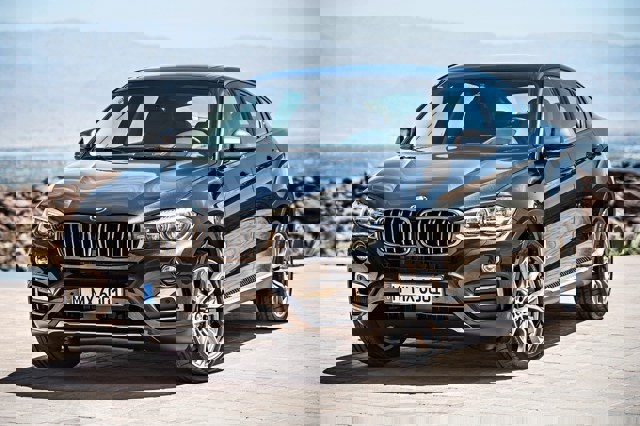
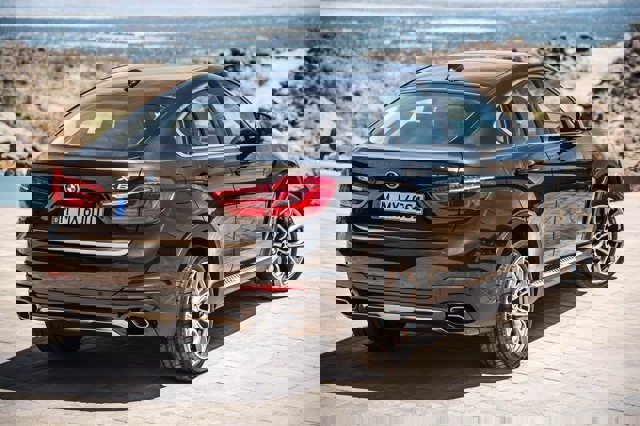
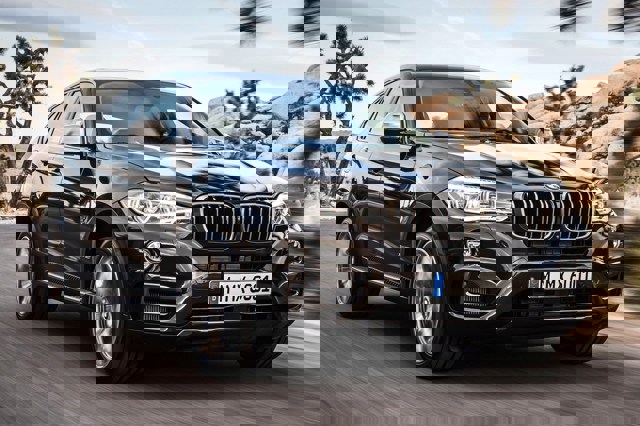
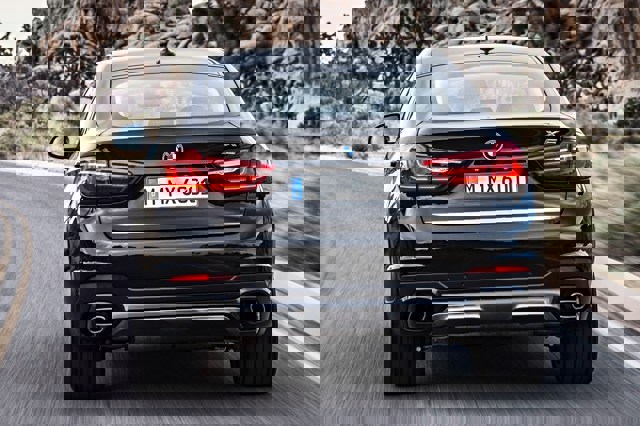
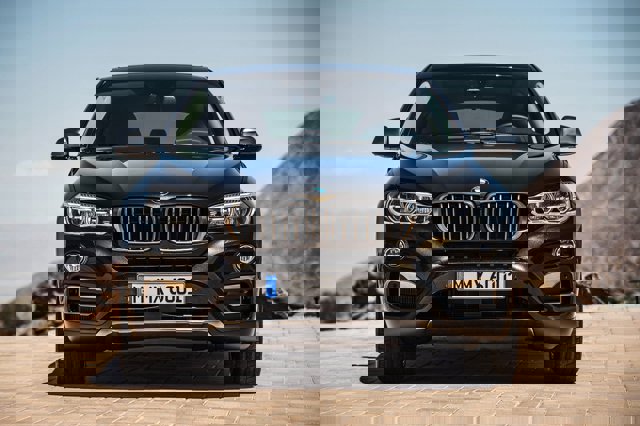
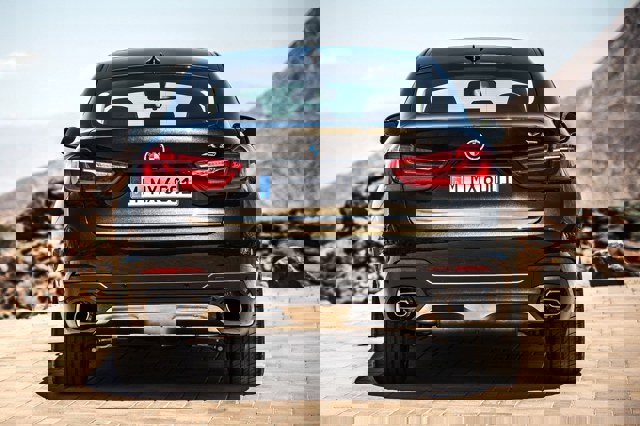
With this current second-generation X6 it’s gained a degree of acceptability, not least because it started a trend for coupe-like SUVs and we’re more used to seeing them. BMW itself followed the X6 with the smaller X4, while Mercedes-Benz has copied the idea with the GLC Coupe and the GLE Coupe. Certainly the styling with this X6 is a bit more resolved than its predecessor, which was big bootied, despite not being big booted, the X6 now being a bit more balanced of line.
Still overt though, deliberately so, its chunky stance, busy detailing and bold grille are all an X6 signature. BMW doesn’t bother with SE models here, with M Sport the norm - assuming you’ve not gone all-in and gone for the M models themselves. M Sport cars come with 20-inch wheels as standard. If that’s still not big enough M Sport Edition trim gets 21-inch alloy wheels, interior carbon trim and an M Sport Plus package that includes the Digital Cockpit, Head-Up display, sun protection glass and improved Harman Kardon audio equipment.
Being a car that’s at the more irrational end of the buying spectrum the engine line-up does without the X5’s most parsimonious choices. There’s a choice of a turbocharged petrol V8 of 4.4-litres in the xDrive50i, its 450PS and 650Nm of torque enough to get the hefty X6 to 62mph in just 4.8 seconds.
If that’s not a quick enough way to burn through a tank of fuel then the X6 M is worthy of consideration, with the 4.4-litre V8 boosted further, for a 575PS output along with 750Nm of torque. That allows it to get it to 62mph in just 4.2 seconds, which is a bit silly. Addressing the conflicting goals of outrageous performance with a nod, albeit slight, to economy is the M50d. As that little d suggests, this alternative X6 M car is a diesel, it using the same base 3.0-litre in-line six-cylinder as the rest of the diesel line-up but having a triple turbo set-up to allow it its 381PS and 740Nm output. Even so, it takes a whole longer to reach 62mph than the petrol M, for a still not slow 5.2 seconds.
The rest of the diesels are a little bit more sensible, with the xDrive30d M Sport and xDrive40d M Sport having 258PS and 313PS respectively, it unlikely that anyone will find the performance of either lacking. They’ll also help keep the running costs on the right side of horrendous, just. Both have an official combined consumption figure of 40.3mpg - the reality likely to be at least 10-15mpg off that. As the xDrive in all the models’ names alludes to, all are four-wheel drive, and all are automatics too, with an eight-speed transmission coming as standard.
Rivals include that GLE Coupe, as well as more conventional SUVs like Audi’s Q7, the Range Rover Velar or Range Rover Sport, the Porsche Cayenne and Maserati’s Levante. All the more ‘sporting’ choices then, the X6’s sleeker looks allied to a drive that’s at the more engaging end of the scale, at least when applied to a big, heavy SUV, sorry, SAC…
Reviews for BMW X6 (2015 – 2019)'s top 3 rivals
.jpg?width=240&height=160&rmode=crop)

.jpg?width=240&height=160&rmode=crop)

.jpg?width=240&height=160&rmode=crop)
BMW X6 (2015 – 2019) handling and engines
With its sleeker profile the promise is of a sporting drive, and in fairness to the X6 that’s exactly what it delivers. That it uses the X5 as a base is a good thing, it among the best in the class for driver appeal, the X6 building on that. Appealing as the xDrive50i might be, the smooth V8 is a rare machine in the UK despite its qualities. Blame the fuel consumption for that, the 29.1mpg official figure fairly punitive, not least because it’ll be considerably worse in reality.
Petrol die-hards are more likely to opt for the flagship X6 M, which ups the lunacy a lot, with a corresponding trade-off in economy, though you might just convince yourself that it’s worth it. The M cars benefits from the most sophisticated suspension available on the X6, with a fully adaptive set up, which helps mitigate roll in the bends, giving the X6 agility that belies its size and weight.
All X6s have the Adaptive M Sport set-up, which allows a choice of stiffer Sport settings, or a more comfortable one rather unambiguously titled Comfort. Other selectable driver choices include settings for the drivetrain, from economy-based EcoPro modes through Comfort, Sport and Sport+, which alter the characteristics of the transmissions, engine response and steering and chassis systems to suit, Comfort giving the best all-round compromise in daily driving.
That’s true of the engines, as tempting as those smooth, powerful turbocharged V8s are, few X6s leave the showroom with anything but the 3.0-litre turbodiesel underneath its sizeable bonnet. For good reason, too, BMW’s in-line six-cylinder turbodiesel an impressive engine, with plenty of performance, even in its base xDrive30d form with 258PS on offer. Given it shares the same mpg and emissions figure as its xDrive40d relation, which benefits from 55PS more, for a 5.8 second 0-62mph time, it’s difficult not to see the circa £2,700 price walk up to it as a no-brainer, particularly at this level of the market.
While the 3.0-litre turbodiesel might lack the outright power figures of its petrol V8 relations, it’s not short of torque in any guise. It’s that which makes light work of the X6’s weight, which allied to the quick-shifting and plentiful ratios of the eight-speed automatic transmission mean all X6s feel brisk. Mate that to the chassis that mixes fine body control with a supple ride and accurate steering, and the X6 is genuinely engaging and enjoyable to drive. If there’s one criticism about its dynamics it’s that the steering, while it’s precise enough, it doesn’t have any real feel at the wheel. Even so, the chassis itself offers plenty of grip, huge traction and the brakes make for a car that you might find impossible to love, but you can’t help but admire its incredible breadth of ability.
BMW X6 (2015 – 2019) interior
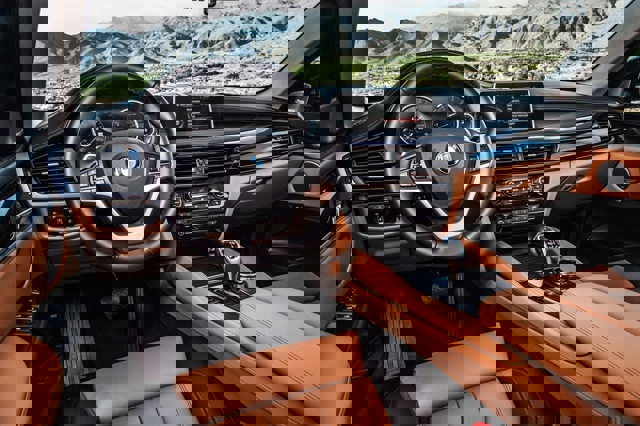
Familiar BMW inside, which means relatively conventional and clear instrumentation - unless you option the Digital Cockpit or choose M Sport Edition trim - with a large 10.2-inch screen sitting proud of the centre of the dashboard. Unlike the latest BMW models, the screen is entirely controlled by the iDrive controller in the transmission tunnel, it all very easy to navigate and simple to understand.
The standard Sports front seats offer masses of adjustment, and come with heating as standard and covered in Dakota leather. Obviously there’s plenty of possibilities to personalise, with Nappa or Merino extended leather choices on offer individually, or BMW bundles up some interior packages together in its Pure Extravagance Ivory White or Cognac options.
You really can spend too much time working out all the different options on offer, though we’d suggest the only ‘musts’ are the Surround View in addition to the standard Reversing Assist camera, to aid visibility around it when manoeuvring in tight spaces - all spaces feeling tight in the wide X6.
To that we’d perhaps add Apple Carplay preparation, and maybe a head-up display, if you’ve not gone for the M Sport Edition which gains it, along with things like rear privacy glass.
The rear seats split and fold in a 40/20/40 fashion, allowing through loads, the boot able to be accessed by waving your foot under the rear bumper. Overall, the interior feels and looks of the sort of quality you’d expect at the X6’s price point, though you might baulk at some of the materials in areas if you’re up in the six-figure league that the range-topping M models command.
Rear seat space, despite the sloping roofline is good, with two adults being comfortably accommodated back there, three at a push - the X6 today, unlike its predecessor, having a third seatbelt in the back. As it’s been mentioned, a few times, the boot’s space is 580 litres with the seats in place, or 1,525 litres with them folded. That compares to 650/1,870 litres in the X5, or 770/1,710 litres in a Porsche Cayenne, which is perhaps the X6’s most obvious rival, even though it’s more conventionally SUV shaped.
Model History
October 2014
BMW X6 revealed
The ultra-high performance with exceptional fuel efficiency that characterises every car from BMW’s sporty M division is once more fused with all-roads, all-weathers capability with the introduction of the second-generation X5 M and X6 M. Compared to the 2009 models which they succeed, they bring improvements of up to 10 per cent in power, torque and performance while lowering fuel consumption and CO2 emissions by over 20 per cent.
Both models are powered by a new 4.4-litre M TwinPower Turbo V8 engine with two TwinScroll turbochargers. With outputs of 575 hp and 750 Nm, it is the most powerful engine ever developed by BMW for four-wheel-drive vehicles. It is linked to a newly developed eight-speed M Steptronic automatic transmission now featuring Drivelogic. The cars’ outstanding driving dynamics benefit from specific tuning by BMW M, while their bespoke interior and exterior designs blend sportiness, luxury and functionality.
| Model | Power Hp |
Torque Nm | 0 – 62mph Seconds | Top Speed Mph | Combined Mpg | CO2 Emissions g/km |
| BMW X5 M | 575 | 750 | 4.2 | 155* | 25.4 | 258 |
| BMW X6 M | 575 | 750 | 4.2 | 155* | 25.4 | 258 |
| * Electronically limited | ||||||
The bare figures for the new BMW 4.4-litre V8 engine in the X5 M and X6 M are impressive enough in themselves, but they tell only half the story. This new power unit develops its maximum 575 hp – four per cent more than the engine in the previous models – from 6,000 to 6,500 rpm, while peak torque of 750 Nm (a gain of 10 per cent) is available from 2,200 to 5,000 rpm. This combination of high-revving capability with linear, rapid response is thanks to the engine’s innovative M TwinPower Turbo technologies, which include cross-bank exhaust manifolds, two TwinScroll turbochargers, direct fuel injection working at a pressure of up to 200 bar and VALVETRONIC variable valve control.
These technologies, in combination with the newly developed eight-speed M Steptronic transmission with Drivelogic, ensure performance more than meets the expectations of a car from BMW M while at the same time demonstrating exceptional fuel efficiency. The X5 M and X6 M accelerate from 0-62 mph in a supercar-equalling 4.2 seconds, but in normal road driving they are capable of 25.4 mpg, with CO2 emissions of 258 g/km – reductions of over 20 per cent compared to the previous models.
The cross-bank exhaust manifold sends two converged streams of exhaust gas to the TwinScroll turbochargers through four separate exhaust ducts. The engine features an extremely rigid closed-deck crankcase which permits the high fuel injection pressures necessary for it to achieve its impressive power output. A lightweight, torsionally stiff forged crankshaft with low rotating masses helps to sharpen the engine’s responses.
Every model from BMW M has to be passed as ‘fit for the Nordschleife’. The extreme lateral and longitudinal acceleration put upon cars when lapping the Nurburgring places high demands on an engine’s oil supply, but sophisticated sump and suction snorkel geometry ensures that the X5 M and X6 M can generate up to 1.2 g without problems. Meanwhile, a combination of low- and high-temperature radiators ensures optimum cooling for the engine coolant, charge air and engine and transmission oil. Electronically controlled flaps within the exhaust system help to provide a riche sporty soundtrack.
The eight-speed M Steptronic transmission with Drivelogic delivers all the advantages in terms of responsiveness of the M Double Clutch gearbox in other BMW M models, with the smoothness of a torque converter automatic. It also allows for a wider spread of gear ratios to foster greater fuel efficiency, and for the first time in a torque converter automatic it permits ‘creep on demand’ through the Low Speed Assistant system. The Drivelogic function allows the driver to prioritise fuel economy, comfort or sports performance, while gear changing can be fully automatic or driver-controlled via paddles on the steering wheel. A Launch Control function is fitted to permit perfect standing starts.
The xDrive four-wheel-drive system is fully flexible in the way it distributes torque to each axle, to ensure maximum traction on all roads and in all weathers. Normally the bias is towards the rear to give the X5 M and X6 M maximum agility, but when the occasion demands, 100 per cent of engine torque can be sent to either axle.
BMW created the Sports Activity Vehicle sector with the original X5 and X6, and the new M models are once again the ultimate expression of the genre. They now deliver improved cornering force through revisions to the upper front wishbones, which have increased camber, camber progression and steering pivot axis, while directional stability has been increased thanks to revised elastokinematics with more rigid bearings. The X5 M and X6 M feature firmer suspension tuning than other X5 and X6 models, a 10 mm lower ride height, Dynamic Drive active roll stabilisation and self-levelling air suspension at the rear. Dynamic Performance Control with COMFORT, SPORT and SPORT+ modes allows the driver to personalise the suspension settings at the touch of a button.
Both models feature specially developed mixed tyres to ensure the maximum steering precision and feedback, traction and lateral and directional stability. They are fitted as standard with Pirelli P Zero tyres (285/40 R 20 Y at the front and 325/35 R 20 Y at the rear) on 20-inch light-alloy rims, but 21-inch wheels with Michelin Pilot Super Sport UHP tyres (285/35 R 21 Y front; 325/30 R 21 Y rear) are optionally available.
The steering is an electronically assisted rack and pinion M Servotronic system with M-specific gearing and tuning. Compared to a conventional hydraulic steering set-up, it reduces fuel consumption by 0.3 litres per 100 kilometres (62 miles). As with the suspension, drivers can opt for COMFORT, SPORT and SPORT+ settings. The high-performance brakes have been hones in motor sport and feature six-piston fixed callipers at the front, single-piston floating callipers at the rear and 50 per cent larger brake linings than those in the previous models. Weight has been reduced by 1.6 kg, helping to reduce unsprung masses. The brake callipers are painted in Dark Blue metallic.
The new four-wheel-drive M models now feature an optimised DSC (Dynamic Stability Control) system which permits an even more dynamic driving style and includes the additional safety functions Brake Standby, Brake Drying, Fading Compensation and Start-Off Assistant. DSC now allows three driving modes – DSC on, in which case the electronic systems provide maximum help to maintain stability; M Dynamic Mode (MDM), which allows some mild drifting before the electronics come to the driver’s assistance; and DSC off, which intervenes only in the most extreme circumstances.
The exterior design of the new BMW X5 M and X6 M is purely function-led. The four large air intakes and flaps at the front and the diffuser at the rear perform essential cooling and aerodynamic functions, for example, and the same is true of the M-specific Air Breathers behind the front wheels, which reduce turbulence in the front wheel arches. Airflow around the cars is so well managed that both drag and lift are minimised.
From the front, the two cars are identical, but as they stretch backwards the X5 M demonstrates its sporting practicality and versatility while the X6 M has the flowing lines of a high-performance sports coupé. Both have the raised seating position typical of a BMW X model. The headlights with integrated washer system are borrowed from the BMW X6, while special flaps in the outer front air intakes – adapted from those on racing cars – reduce lift. Both cars have twin-stalk exterior door mirrors with integral indicators. At the rear, there are body-coloured M aprons and a distinctive four-tailpipe exhaust – another M hallmark. The X6 M has a spoiler to reduce rear-axle lift.
The interiors exude sporting luxury. There is an M leather steering wheel with gearshift paddles, an M gearshift lever, an M Drive menu in the information display and M Drive buttons on the steering wheel. The M front sports seats, like the rest of the upholstery, are trimmed in fine-grain Merino leather with contrast stitching, and there are embossed M logos. Door sill strips with model lettering, aluminium interior trim strips and an anthracite-coloured roof liner from BMW Individual add further touches of sporting exclusivity.
Standard features include Adaptive Dynamic suspension, Adaptive M suspension, Cruise Control with brake function, Driving Assistant, Dynamic Stability Control Plus (ABS, ASC, brake drying, brake fade compensation, brake pre-tensioning, Cornering Brake Contol, Dynamic Brake Control, Dynamic Traction Control, Electronic Brake-force Distribution and Hill-start Assistant), Hill Descent Control, front and rear Park Distance Control and a rain sensor with automatic headlight control.
There are 40:20:40 split folding rear seats, electric driver’s seat adjustment with memory, heated front seats, downlights in the exterior door handles, High-gloss Shadowline exterior trim (including the roof rails on the X5 M), metallic paint, a split tailgate with a powered upper section (for the X5 M), two-zone automatic air conditioning, front and rear cup holders and courtesy lights, all-round electric windows with comfort closing, velour floor mats, footwell lights (LED in the front), a leather-trimmed instrument panel, Aluminium Trace interior trim with Pearl Grey Chrome finishers, a retractable and removable luggage cover, four 12-volt power sockets, electric steering wheel adjustment, green window tinting and an engine start/stop button.
Infotainment is provided by the BMW Professional DAB radio with a single CD player. There is also a 20GB hard disc drive and a socket for connecting auxiliary devices. Both cars are also supplied with Enhanced Bluetooth featuring Voice Control, BMW ConnectedDrive services (Apps interface, Emergency Call, Online Services, TeleServices, Information Plus, Real Time Traffic Information and Remote Services), an M-specific Head- up Display, BMW Professional Multimedia Navigation and an On-Board Computer.
What to watch out for
Report of failed differential on three-year-old X6 with 50,000 miles. Differential has failed due to water ingress. BMW dealer has rejected warranty claim, saying it has been caused by driving through water. Owner says they have never taken the car off-road and the only water they have driven through has been surface water on paved roads.
