
Volkswagen e-Golf (2014 – 2020) Review
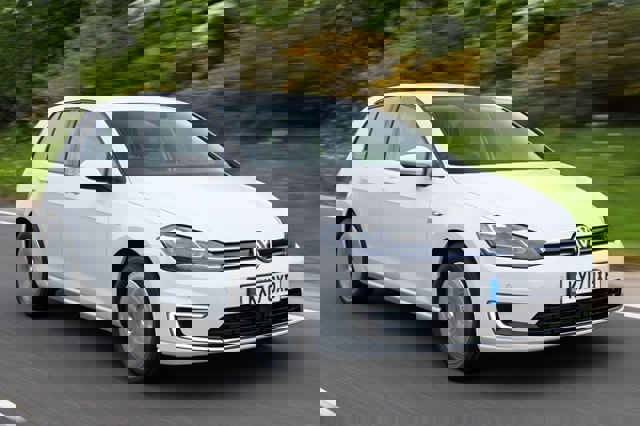
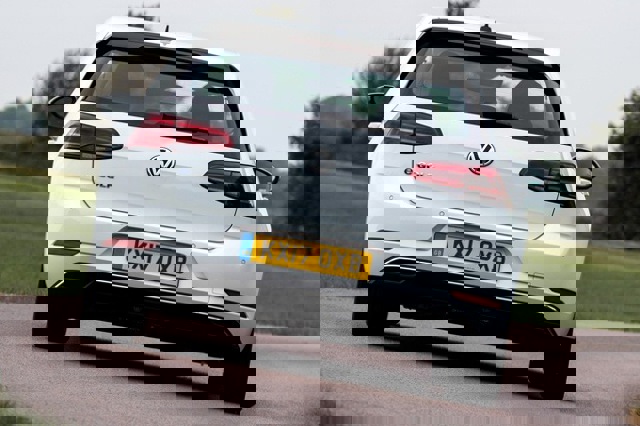
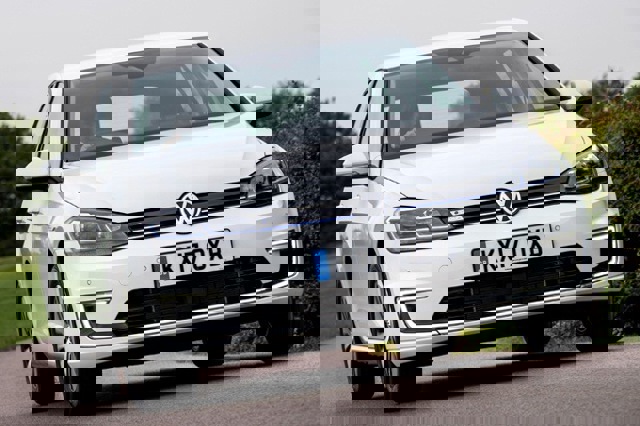
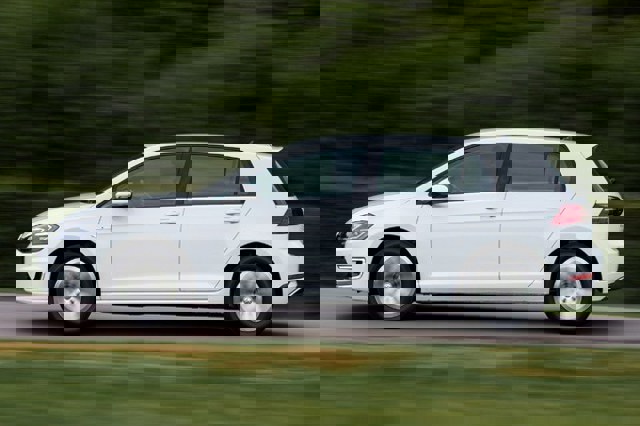
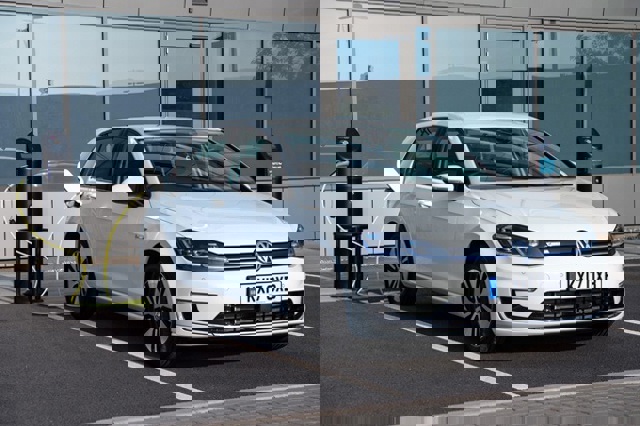
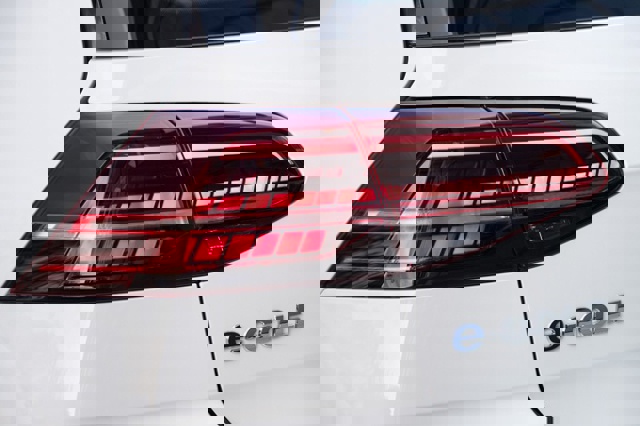

Volkswagen e-Golf (2014 – 2020) Verdict

 Impressively swift and smooth performance. 119-mile real life range. Regenerative braking makes town driving easier. Feels similar to a petrol Golf.
 118.75 mile range is limited compared to a petrol or diesel and to later generations of electric cars. (Even VAG's Mii electric has an official range of 162 miles.)
Find out more about the Volkswagen e-Golf (2014 – 2020)
A few years ago, you had to be a die-hard early adoptor to buy an electric car. But they're gradually becoming more commonplace, and if there's one car that will truly take EVs to the mainstream, it's the ubiquitious Volkswagen Golf. The electrically-powered version of the Golf offers the same formula of practicality, quality and refinement as the rest of the Golf range, but with the big advantage of no emissions and no need to ever put fuel in it.
Instead you only need to plug in the e-Golf to charge it up. Using a wallbox, a full charge from empty to maximum can be done in a little over five hours. With the electric charging network in the UK ever expanding, there are now far more charging points available at supermarkets, shopping centre car parks, railway stations and motorway services.
Of course the worry with any electric vehicle is that you will run out of power, miles away from a charging point. But with a realistic range of around 120 miles this is less of a worry with the e-Golf. Of course it's not a car that will suit everyone - but for many people who do even a reasonable distance commute, the e-Golf could make sense as an every day car.
It drives well too. This is no slow eco-special, instead it feels as rapid as a turbocharged petrol Golf. The power figures are reasonable with 136PS and 290Nm of torque, but what makes all the difference is that all the torque is available from a standstill, making the e-Golf a rocket at the lights. From 0-30mph it is effortlessly fast and really enjoyable to drive, even beyond the novelty factor.
It's just as good on larger roads with strong pace on the move. It's incredibly easy to drive with a single-speed gearbox plus there are clever regenerative braking modes which, although slightly disconcerting at first, make driving in town much easier.
The one sticking point is the price: the e-Golf costs £28,230 after the government electric car grant of £4500, about the same as a Golf GTD. However, the BMW i3 is only marginally more expensive and has more power, albeit with a slightly shorter range. At least its relative age now means that it's one of the cheapest electric cars worth buying - it's relatively affordable on the used market.
What the Golf does have on its side is familiarity. It's very easy to get to grips with as, bar some different instrument dials, it's very much like any other Golf from behind the wheel. For those who want an electric vehicle without anything weird or wacky, the e-Golf has a lot of appeal.
Reviews for Volkswagen e-Golf (2014 – 2020)'s top 3 rivals
.jpg?width=240&height=160&rmode=crop)

.jpg?width=240&height=160&rmode=crop)
.jpg?width=240&height=160&rmode=crop)

Volkswagen e-Golf (2014 – 2020) handling and engines
The e-Golf is powered by an electric motor that produces 136PS - around the same as the 1.5 Golf TSI. That's a reasonable amount of power but what really gives the e-Golf pace is the 290Nm of torque. This is available from a standstill so away from the lights the Golf feels very rapid, making it ideal for city driving.
There's no DSG gearbox, instead the e-Golf has a single speed automatic making it very straightforward to drive. There's always plenty of power available and it's responsive too - even at speed the torque gets to the wheels five times quicker than in a conventional petrol or diesel engine. From 0-62mph the e-Golf takes 9.6 seconds - as a comparison an 130PS Golf TSI does it in 9.1 seconds.
As there's no noise, aside from the whir of the electric motor, it's a very relaxing car to drive. In fact it feels very much like any other Golf. It rides smoothly and deals well with potholes, speed bumps and cat's eyes. Yet it's still good in corners with responsive steering and impressive body control.
As hatchbacks go the Golf is one of the best around when it comes to an all round blend of ride and handling so we're pleased to report that the e-Golf drives as well as the rest of the range. The lithium-ion batteries are located in the floor, in front of the rear axle, which means a low centre of gravity. In terms of weight the e-Golf is around 730kg heavier than an equivalent Golf 1.5 TSI.
You don't notice that extra weight on the move though. The e-Golf is ideally suited to urban driving and is more responsive from 0-30mph than most diesel or petrols, with an effortless nature to its performance. It's not out of its depth on motorways or A-roads either. The top speed is limited to 93mph and it will happily keep up with fast flowing traffic as easily as a 1.5-litre petrol. The fact it has plenty of immediate torque means you aren't left wanting when it comes to meaningful acceleration for safe overtaking.
One unusual feature of the e-Golf is the regenerative braking. There are five modes and all will help in preserving the range of the e-Golf. The most effective is the B (for braking) setting which like the other modes works by automatically braking when you come off the power. It sounds strange, but in town it's very effective. You can almost drive the e-Golf using just the accelerator pedal. It also makes you more aware of planning ahead when driving so you can avoid using the brakes. Your passengers will also benefit as once you're adept at using the system, it makes for smoother progress.
To further preserve the electric power, there are two economy modes. The most effective is Eco+ which limits power to 75PS and torque to 175Nm while switching off the air conditioning. It does make the accelerator pedal feel like it's stuck in treacle, but in traffic you don't notice the lack of power and it really helps in preserving your maximum range.
Although the NEDC gives a range of 186 miles, as with any form of engine, this depends on how you drive and what systems you're using. If you're careful and use the regenerative braking modes (and don't have the air conditioning working overtime) you'll easy see more than 100 miles on a single charge which is more than adequate for most needs.
| Engine | MPG | 0-62 | CO2 |
|---|---|---|---|
| e-Golf | - | 9.6–10.4 s | - |
Volkswagen e-Golf (2014 – 2020) interior
- Boot space is 341–1231 litres
- Euro NCAP rating of five stars
| Dimensions | |
|---|---|
| Length | 4270 mm |
| Width | 2027 mm |
| Height | 1450–1482 mm |
| Wheelbase | 2630 mm |
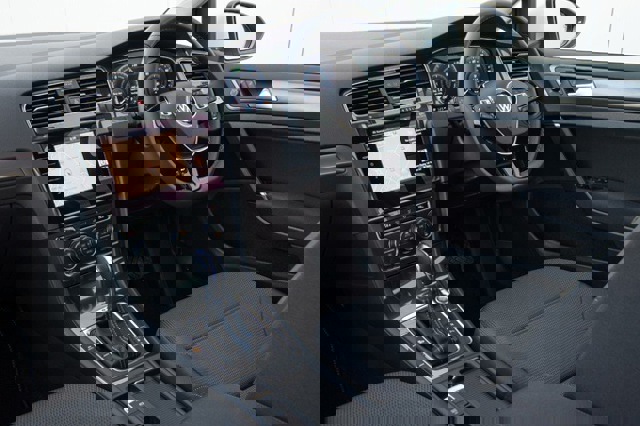
While this may be an electric car, the interior is pretty much identical to a standard Golf meaning it's intuitive, well finished and comfortable. There are some touches to remind you this is something a bit different, such as the blue stitching on the steering wheel and gear lever, but for all intents and purposes this is like any other Golf. The finish is typical Volkswagen with a solid and high-quality feel throughout. It feels very much a premium product.
Like any other Golf, you get analogue instruments but in the e-Golf they're slightly different. Rather than a fuel gauge you have a battery meter while the rev counter is replaced by a power dial showing the percentage of power being used and when the battery is being regeneratively charged.
The nav system with its eight-inch touchscreen also has some useful extras including a range display on the map and locations of available charging stations. Smartphone users can also download the Volkswagen Car-Net app which lets you remotely control different functions on the car including heating and cooling along with charging information.
One interesting option is the heat pump which helps preserve the range in the winter. Heating the cabin uses more power in an electric car than in one with a conventional engine, so this system uses heat from ambient air and the vehicle's systems to reduce the amount of power used. According to Volkswagen it can increase the range in cold weather by up to 20 per cent.
As the batteries are located in the vehicle floor there's no compromise inside with the same passenger and 380-litre boot space. The driving position is very good with plenty of adjustment in the steering column while the electric parking brake frees up space on the centre console. Twin cupholders and large door pockets mean storage is very generous.
e-Golf comes as a five-door only and in one trim level that includes 2Zone climate control, front and rear parking sensors, 16-inch alloy wheels, Discover Pro sat nav, adaptive cruise control, city emergency braking, a driver alert system, PreCrash occupant protection, automatic headlights and wipers, auto-dimming rearview mirror, DAB radio, Bluetooth, MDI with Lightning and 30-pin connectors and a front armrest.
Volkswagen e-Golf (2014 – 2020) models and specs
| Dimensions | |
|---|---|
| Length | 4270 mm |
| Width | 2027 mm |
| Height | 1450–1482 mm |
| Wheelbase | 2630 mm |
| Miscellaneous | |
|---|---|
| Kerb Weight | 1585–1615 kg |
| Boot Space | 341–1231 L |
| Warranty | 3 years / 60000 miles |
| Servicing | 18000 miles |
| Spare Wheel | |||
|---|---|---|---|
| Standard | Space-saving spare wheel | ||
| Costs | |
|---|---|
| List Price | £31,680 |
| Insurance Groups | 15 |
| Road Tax Bands | A |
| Official MPG | - |
| Euro NCAP Safety Ratings | |
|---|---|
| Adult | - |
| Child | - |
| Pedestrian | - |
| Overall | 5 |
Currently on sale
| Hatchback | |||
|---|---|---|---|
| Version | List Price | MPG | 0-62 |
| e-GOLF 136ps 1 Speed DSG 5dr | - | - | 9.6 s |
On sale until May 2017
| Hatchback | |||
|---|---|---|---|
| Version | List Price | MPG | 0-62 |
| E-115ps DSG 5dr | £31,680 | - | 10.4 s |
Model History
- August 2013: New e-Golf unveiled
- January 2014: Plug-in hybrid Volkswagen Golf GTE went on sale at £28,035 RRP
- March 2014: e-Golf available to order
- September 2017: Updated e-Golf launched
- August 2019
August 2013
New e-Golf unveiled
Standard features include automatic climate control with parking heater and ventilation, radio-navigation system, windscreen heating, LED daytime running lights and the Volkswagen brand’s first use of LED headlights. The e-Golf attains a value of 12.7 kWh.
Made in Germany. Innovative drive technologies are core competencies at Volkswagen. Therefore, the e-motor, gearbox and lithium-ion battery of the e-Golf are developed in-house, and they are manufactured in large Volkswagen component plants in Germany.
The e-Golf is driven by an 85 kW/115 PS electric motor. The motor produces its maximum drive torque of 270Nm as soon as it starts off. The results - the front-wheel drive e-Golf reaches 62mph in 10.4 seconds. On a motorway, the speed of the five-seat front-wheel drive car is electronically limited to 140km/h.
The e-Golf with its 24.2 kWh battery has a range of 190km. There are two very efficient driving modes (“Eco”, “Eco+”) and four just as easy to activate regenerative braking modes (“D1”, “D2”, “D3” and “B”) help to extend the maximum range. The fastest CCS charging stations (direct current) shorten the time needed to charge the battery of an e-Golf to 80 per cent capacity to around just half an hour.
January 2014
Plug-in hybrid Volkswagen Golf GTE went on sale at £28,035 RRP
(after receiving £5,000 Government 'Plug-in' Grant). Unlike the e-up! and e-Golf which are sold through a network of 25 e-Retailers, the GTE is available through all of the company’s franchised sales outlets.
The name of Golf GTE reflects its power and performance. It is driven by two engines: a 1.4-litre 150 PS TSI direct-injection petrol engine and a 102 PS electric motor. Together, they produce a maximum power of 204 PS and a theoretical range of 580 miles, while maximum torque is 350 Nm (258 lbs ft). A six-speed DSG gearbox developed for hybrid vehicles is standard.
The electric motor is integrated into the gearbox housing, while further hybrid components include power electronics and a charger. An electro-mechanical brake servo and an electric air conditioning compressor make for energy-efficient braking and air conditioning. There are five operating modes: ‘E-mode’, ‘GTE mode’, ‘Battery Hold’, ‘Battery charge’ and ‘Hybrid Auto’. In pure electric mode (activated at the press of a button), the Golf GTE can travel up to 31 miles. Electric power can also be saved – for example when driving to a zero-emissions zone – and in electric mode, the GTE is capable of speeds of up to 81 mph.
With the TSI engine engaged as well, the Golf GTE can sprint from zero to 62 mph in 7.6 seconds and on to 138 mph, yet returns a combined cycle figure of 166 mpg and CO 2 emissions of 39 g/km. As such it is expected to be exempt from VED and the Congestion Charge.
The Golf GTE’s 8.8 kWh lithium-ion battery can be charged in 3.75 hours from a domestic mains outlet, or 2.25 hours from a domestic wallbox.
The Golf GTE is available in five-door bodystyle only and in one highly-specified trim level. Visually, it combines elements of the e-Golf and Golf GTI, with C-shaped LED daytime running lights (e-Golf) and aerodynamic horizontal ‘fins’ (GTI). Where the GTI features red, the GTE has blue accents, including across the radiator grille and into the headlights (which as on the e-Golf are LED), while 18-inch ‘Serron’ alloy wheels are fitted as standard.
Inside too, the GTI’s red highlights are turned to blue – including the stitching on the steering wheel, gear lever gaiter and seats, and a blue stripe in the tartan pattern on the sports seats. Touchscreen infotainment system with DAB radio and Bluetooth is standard, while optional navigation includes bespoke EV features such as the ability to identify potential destinations on electric range, and charging points.
The GTE also has an e-manager which allows the driver to preset vehicle charging, as well as interior cooling or heating and these functions can be operated remotely using the Car-Net app on a smartphone; a three-year subscription is standard in the UK. The speedometer and tachometer are familiar, and the latter is supplemented by a power meter in the central display, which shows the status of the battery, whether or not power is being used and the intensity of any regeneration.
March 2014
e-Golf available to order
Priced at £25,845 on the road (including £5,000 Government grant or £30,845 RRP) the e-Golf can be ordered from one of 24 Volkswagen EV specialist Retailers across the UK, with the first deliveries expected at the end of June.
Like its smaller electric sibling, the e-Up, the e-Golf can be charged from a household three-pin socket using the cable provided. With a standard UK 230-Volt, 2.3 kW supply, this recharges the battery in 13 hours. An optional wallbox for home use provides 3.6 kW supply and can recharge a flat battery in eight hours. The wallbox is currently available at no cost, through British Gas, while all customers of Volkswagen electric products are also eligible for a green electricity tariff through Ecotricity. Through use of the e-Golf’s standard combined charging system (CCS) and a DC supply, the battery can be fully recharged (at levels of up to 40 kW) to 80 per cent capacity in just 35 minutes.
An AC electric motor (85 kW/115 PS, and 270 Nm) provides drive, linked to the front wheels via a single-speed gearbox. The lithium-ion battery is integrated into the Golf’s floor and weighs 318 kg. It consists of 264 cells, together rated at 323 Volts and 24.2 kWh.
Acceleration from 0-62 mph takes 10.4 seconds. By comparison the Golf BlueMotion, which is powered by a 1.6-litre turbodiesel engine with 110 PS and 250 Nm, takes 10.5 seconds. Top speed for the e-Golf is 87mph. Depending on driving style, charge level and ambient conditions, the e-Golf has a range of up to 118 miles.
An optional heat pump helps deliver maximum range in winter. This add-on module for the electric heating and air conditioning uses heat from both ambient air and the vehicle’s drive systems, significantly reducing electricity consumption. It can increase the e-Golf’s range in cold weather by up to 20 per cent.
As well as a standard driving mode, the e-Golf has two economy profiles: ‘Eco’ and ‘Eco+’. ‘Eco’ cuts peak power to 70 kW/95 PS, reduces the output of the air conditioning system and modifies the accelerator response. Top speed is cut to 74 mph and 0-62 mph takes 12.1 seconds. ‘Eco+’ limits maximum power to 55 kW/75 PS, torque to 175 Nm and top speed to 56 mph, while the accelerator response is modified and the air conditioning disabled. In either mode, full performance can be accessed by kicking down on the accelerator pedal, as in a vehicle with a conventional automatic gearbox.
The e-Golf’s range can also be influenced by regenerative braking. There are five modes: D, D1, D2, D3 and B. In D, the vehicle coasts without regenerative braking when the accelerator is lifted. In each other mode, lifting off the accelerator pedal provides greater regenerative braking. In D2, D3 and B, the brake lights are activated when the driver’s foot is lifted from the accelerator pedal, provided that a predetermined level of deceleration is achieved.
The e-Golf is the first production Volkswagen to feature full LED headlights. These produce brighter light and use less electricity than xenon headlights. Other bespoke exterior design elements include C-shaped LED daytime running lights in the front bumper, a signature blue strip running the width of the radiator grille and into the headlights, and a blue-edged Volkswagen roundel. The interior includes blue stitching on the upholstery, and the option of blue ambient lighting.
In the UK, the e-Golf is available with five doors only, and in a single well-equipped trim level based on the standard Golf SE, with the addition of 2Zone climate control, front and rear parking sensors, e-specific ‘Tilleves’ alloy wheels and Discover Pro satellite navigation, with an eight-inch colour touchscreen. For the e-Golf the Discover Pro system includes added functionality including a range display, and the option to pre-programme the vehicle’s heating or cooling systems. For smartphone users (Android or iOS), the Volkswagen ‘Car-Net’ app enables many vehicle functions to be controlled remotely, including charging, heating or cooling and more. Three years’ subscription to Car Net is included as standard.
September 2017
Updated e-Golf launched
The driving range is extended to 186 miles (NEDC), while with driving style and other parameters considered, the range is effectively 124 miles. New technology including Discover Navigation Pro. Available to order from £32,190 (RRP OTR), or £27,690 including Plug-in Car Grant
Participating Volkswagen e-Retailers are offering a deposit contribution of £1,000 at 4.9% APR representative on the updated e-Golf when the customer purchases the car using Volkswagen Financial Services’ Solutions Personal Contract Plan.
Increrased range achieved by an increase in the energy capacity of the e-Golf’s lithium-ion battery from 24.2 kWh to 35.8 kWh. Power goes up to 100 kW, or 136 PS. 0 to 62 mph time now 9.6 seconds and a top 93 mph. Torque is boosted from 270 Nm to 290 Nm. As before, drive is via a single-speed gearbox.
The 124-mile range ensures the e-Golf is practical for the vast majority of commuter journeys. When the e-Golf needs charging the battery can go from empty to 80 per cent full in just 45 minutes when a 40 kW DC rapid charger connection is used.
Alternatively, charging from empty to full from a wallbox charging takes approximately 5 hours 20 minutes, which opens the opportunity to charge the car conveniently during the working day or overnight.
Staying with the convenience theme, Volkswagen’s innovative Volkswagen Car-Net mobile smartphone app makes it easy for the e-Golf owner to access various functions of their vehicle. They can start or stop the air conditioning from outside the car, even when it’s locked. They can also set the preferred time for charging to start and stop. And the most recent parking location of the e-Golf is displayed at the touch of a button.
Discover Navigation Pro infotainment system includes Gesture Control and is operated via an enlarged 9.2-inch colour touchscreen and satellite navigation with European maps and a voice recognition system for controlling the telephone and navigation functions.
August 2019
Volkswagen UK reduced the price of the e-Golf to £31,075 RRP OTR, which equates to £27,575 after the Government’s Plug-In Car Grant. This represents an OTR price reduction of £2,765.
What to watch out for
Battery chargers in some (but not all) Golf GTE, e-Golf, Passat GTE and e-Up models have been found to contain a poisonous metal called cadmium, which has been linked to a range of lung conditions that include cancer. The metal was fitted by a third party company, which builds part of the high-voltage charging unit for Volkswagen. Volkswagen is now in the process of investigating how it came to be present. The third party organisation no longer builds components for its plug-in models. Apparently the issue will not cause any harm to the public, owing to the fact that the small amount of cadmium - 0.008 grams per battery charger - is housed within a sealed unit. However, the presence of cadmium could cause problems when the vehicle is scrapped, recycled or dismantled.
04-09-2018:Report of heated front screen of e-Golf being vulnerable to cracking from a line of sight stone chip.
07-04-2019:Report of lack of fault-finding support at VW dealerships for VW e-Golf. Reader's e-Golf had driven 20k trouble-free miles until a recent 'electric fault' warning light required it to be driven to a VW dealer for diagnosis. The car is within warranty and has now been with the franchised dealer for over 6 weeks. The dealer has been unable to secure the required diagnostic tools from VW resulting in the car not being diagnosed, fixed and returned. The garage and VW are unable to provide any indication of when the diagnostic tools will be available.
20-11-2019:Report of new (October 2019) VW e-Golf failing to make 150 mile range promised by the salesmen on a full charge. After 600 miles of driving the most the new owner has seen is 116 miles. However, the official range is only 190 kilometres, which is 118.75 miles, so the salesman was being a bit economical with the truth.
