
Volkswagen Golf Review 2026

Volkswagen Golf Verdict

 Very comfortable and refined. Range of strong, quiet and efficient engines. Classy image.
 Infotainment is fiddly to use and often glitchy. Cabin quality isn't quite as good as the previous Golf. Its VW Group siblings are roomier in the back.
Find out more about the Volkswagen Golf
The Volkswagen Golf is still the consumate all-rounder. There is no weak link in the engine range, it rides and handles well and it should prove cheap to run. But it isn't as roomy inside as the SEAT Leon and Skoda Octavia it shares its platforms and engines with, while the infotainment is frustrating at times and there are some cheaper plastics than you might expect in a Golf.
The Golf is as important to Volkswagen as the vacuum cleaner is to Dyson. Yes, both companies have diversified into new products (with VW in particular betting the farm on its EV future), but they are still known and recognised globally for that particular product.
It's an enduring success story spanning five decades and eight generations, but more than that the Golf is the only mainstream family hatchback that is considered classless. Whether you're a millionaire looking to blend into the background, a middle-income parent after a dependable family car, a new driver or a hot hatch enthusiast, chances are you've considered buying a Golf at some point in your life. What some see as 'dull' could actually be seen as subtlety and classiness.
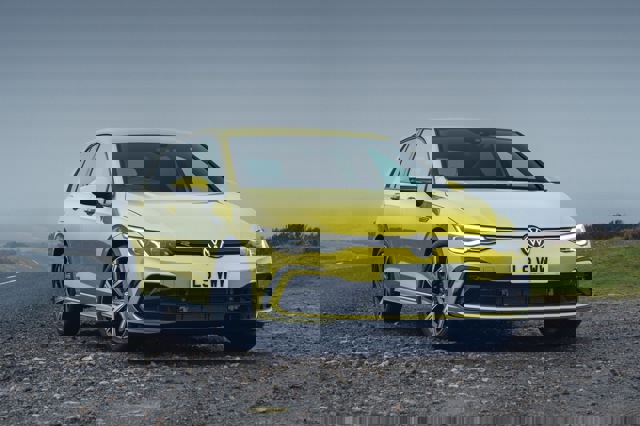
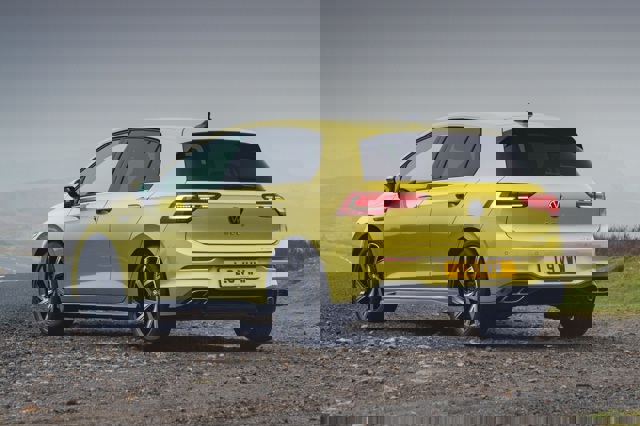
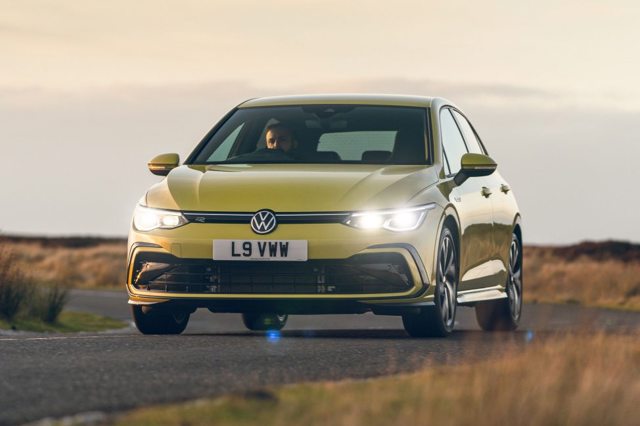
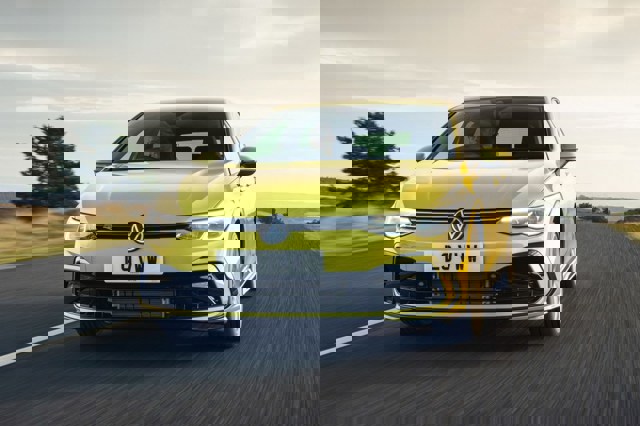
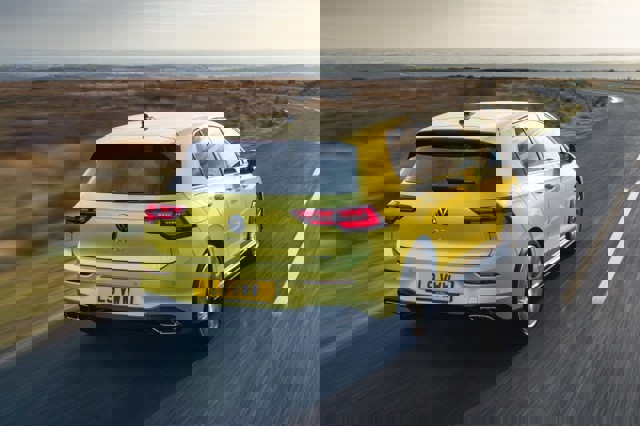
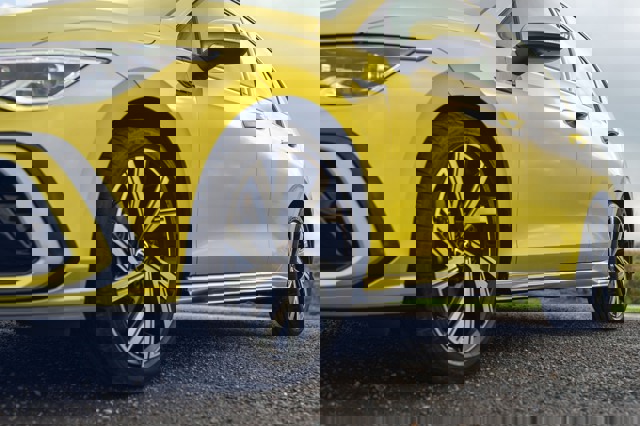
This new, eighth-generation VW Golf appears a little bit more showy than its predecessor - at least until it becomes part of the street furniture like older Golfs. The distinctive 'monobrow' front-end look can be shown off even more with a full-width LED light bar, while inside most of the traditional buttons are replaced by touch sensitive panels and a cool-looking touchscreen.
Happily, elsewhere the Golf's tried and tested traits remain intact. It feels solid and built to last, its pretty roomy and practical, its comfortable and refined and yet good to drive, and it's well-equipped as standard even from base level.
There's also a range of engine options to suit pretty much every need, from the affordable 1.0-litre petrol that punches above its weight, to ultra-frugal diesels, to high-tech hybrids and fast and fun GTI models. The best all-rounder is the excellent 1.5-litre turbo petrol engine, which will meet most people's needs (although the 1.0-litre is a lot better than you might expect).
Volkswagen asks for more money for the Golf than its platform-sharing sibling models, the SEAT Leon and Skoda Octavia. For that you don't just get a more upmarket image, you also get more kit as standard, such as digital instruments, wireless phone charging and ambient lighting, and a classier interior. Whether it's worth the extra is up to you, though, and (if we're being picky) some areas of the new Golf's cabin don't feel quite as premium as they did in the seventh-generation Golf.
Another issue with the latest Golf is that its cheaper siblings are also longer, meaning more legroom in the back and (in the Skoda) bigger boot. It's not as if the Golf is cramped, but family buyers (or people with tall mates) may value that bit of extra space. And, like its siblings, there are some glaring issues with the infotainment that will take some getting used to.
The VW Golf might not be the clear favourite in the family car class any more, with rivals that are better than ever. But it's still an excellent buy, provided you're aware of its foibles.
Looking for a second opinion? Read heycar's Volkswagen Golf review.
Reviews for Volkswagen Golf's top 3 rivals


.jpg?width=240&height=160&rmode=crop)

.jpg?width=240&height=160&rmode=crop)
.jpg?width=240&height=160&rmode=crop)
.jpg?width=240&height=160&rmode=crop)
Volkswagen Golf handling and engines

- Engines range from 1.0 eTSI DSG to 2.0 TDI 200 DSG
Volkswagen Golf 2026: Handling and ride quality
The traditional family hatchback pecking order always said that the Ford Focus was the fun one, and the Volkswagen Golf was the comfortable one. That continues to be the case, but the Golf is much better to drive than you might expect.
It's a world away from the roly-poly handling of the Mk4 Golf of the late nineties. Body control is pretty good, the steering is precise and direct and grip levels are very strong. It lacks the ultimate sharpness and balance of a Focus still, and the more stiffly sprung SEAT Leon changes direction more eagerly, however.
But, the Golf's ace up its sleeve remains, because it's the easiest to drive and most comfortable car in its class. How much ride comfort there is depends on your spec, but it gets the basics right, while light yet slick controls, a decent turning circle and good all-round visibility.
The standard suspension on Life and Style models is very compliant, soaking up the worst potholes Britain's rough roads have to offer without feeling too floaty or loose in the bends. Life models in particular, with their 16in wheels and chunky sidewalls, are remarkably cossetting.
R-Line models receive sports suspension with a lower ride height. These are noticeably firmer, but with good damping they let you feel the road surface without being jostled around or crashing into sharp bumps. It's a decent compromise, although the Golf is as its best with the optional Dynamic Chassic Control fitted.
This brings adaptive dampers, tightening the car's body control in Sport mode and slackening it off in Comfort mode. You'd spend most of your time in Comfort, where the Golf really impresses. Even the GTI and R models aren't too stiff, although the Clubsport is definitely the firmest of the lot.
Refinement is excellent regardless of which model you go for, although larger wheels increase road noise. Aside from that, it's commendably quiet, with very little wind noise.
Volkswagen Golf 2026: Engines
Although the Volkswagen Golf doesn't have as extensive a range of engines as it once did, there isn't a weak point in the lineup.
Although the entry-level 110PS 1.0-litre three-cylinder is pretty far from fast, it very rarely feels underpowered even loaded up with adults, and remains smooth and quiet even in the upper reaches of the rev range.
Keen drivers will prefer the more flexible 130PS 1.5-litre four-cylinder engine, which would be our all-round pick. This is more refined still, but doesn't need to be worked as hard, with plenty of low-down urgency and a good mid-range. The 150PS version is more eager, but only really in the latter part of the rev range.
If you go for an DSG automatic version rather than a manual, you'll get the 'eTSI' mild-hybrid system. It uses a small electric motor and battery (charged up under braking and coasting), which provides a little off-the-line assistance and allows the stop/start system to work more frequently and for longer. The gearbox itself is quick shifting and smooth, but sometimes hesitates when you want to quickly pull out of a junction.
We've yet to try the 110PS diesel version, but experience with that engine elsewhere tells us that, while it's not absolutely the quietest motor in its class, it's strong, linear and efficient. Similarly, we've yet to have a go in the hybrid or GTD versions.
The 245PS GTI's 2.0-litre turbo engine is very punchy and flexible, although it isn't totally thrilling. That honour goes to the Clubsport, whose 300PS version of the same engine is excitingly fast and sounds quite fruity.
Weirdly, the Golf R's engine isn't as exciting as the Clubsport. Maybe it's the extra weight and off-the-line composure of the four-wheel drive system, but we're sure it doesn't sound as good, either. Still, it's crushingly effective and fast.
Volkswagen Golf 2026: Safety
The Volkswagen Golf is one of the safest cars in its class. Euro NCAP gave it a five-star rating in 2019, with impressively high adult occupant and child occupant protection ratings. Its safety assist score was decent, too.
Adaptive cruise control is standard fitment across the range. While that isn't to everyone's tastes (some prefer to adjust the cruise manually on busy motorways, where the adaptive system struggles), it also brings Front Assist. That can detect an impending collision, warning you or priming the brakes. If you don't react, the (again standard) autonomous emergency braking system will step in.
Also fitted on every VW Golf is lane keep assist, a driver fatigue monitor and traffic sign recognition. There's also new tech called 'Car2X', which uses the car's on-board data connection to warn of imminent traffic hazards. It'll become cleverer in future, being able to communicate with other cars and even warn of approaching emergency service vehicles.
Volkswagen Golf 2026: Towing
The Volkswagen Golf isn't really designed to tow heavy loads or caravans - the VW Tiguan SUV is better in that respect - but it will do so if required.
Depending on spec, the maximium towing capacity is between 1,300kg and 1,800 kg, a respectable figure. We don't recommend towing anything but a small caravan, however, because the Golf's low kerbweight makes it less safe and stable. Generally, the rule is you should never tow anything heavier than you're own car, and ideally you'd want your load to be no more than 85% of the car's kerbweight.
| Engine | MPG | 0-62 | CO2 |
|---|---|---|---|
| 1.0 eTSI | - | - | 121 g/km |
| 1.0 eTSI DSG | - | 10.2–10.6 s | 118–120 g/km |
| 1.0 TSI | - | 8.5–10.5 s | 121–125 g/km |
| 1.4 TSI 204 DSG | - | 7.4 s | - |
| 1.4 TSI 245 DSG GTE | - | 6.7 s | 36 g/km |
| 1.5 eTFSI 130 DSG | - | 9.4 s | 126 g/km |
| 1.5 eTFSI 150 DSG | - | 8.7 s | 129 g/km |
| 1.5 eTSI 130 DSG | - | 9.4 s | 124–129 g/km |
| 1.5 eTSI 150 DSG | - | 8.5–8.7 s | 106–133 g/km |
| 1.5 TSI 130 | - | 9.2–9.4 s | 108–127 g/km |
| 1.5 TSI 150 | - | 8.5–8.7 s | 110–133 g/km |
| 2.0 TDI 115 | - | 10.2–10.5 s | 91–123 g/km |
| 2.0 TDI 115 DSG | - | 10.2–10.7 s | 118–122 g/km |
| 2.0 TDI 150 | - | 8.8 s | 120–122 g/km |
| 2.0 TDI 150 DSG | - | 8.4 s | 99–124 g/km |
| 2.0 TDI 200 DSG | - | 7.1 s | 137 g/km |
Volkswagen Golf interior
- Boot space is 374–1845 litres
| Dimensions | |
|---|---|
| Length | 4284–4633 mm |
| Width | 2027–2073 mm |
| Height | 1484–1498 mm |
| Wheelbase | 2620–2669 mm |
Volkswagen Golf 2026: Practicality
The latest Volkswagen Golf is fairly practical and makes a solid choice for family buyers. However, it's less practical than either of its cheaper siblings, which could sway buyers who value outright space high on the list of criteria.
Getting comfortable is very easy up front. The seats are plushly bolstered even in the base model, there's loads of adjustment in the seats and the steering wheel, and all-round visibility is good. You could happily while away hours at the wheel and get out without complaining of aches and pains.
Base Life trim also gets lumbar adjustment as standard, although they aren't the most figure hugging seats around. Mid-spec Style trim brings more supportive sports seats, while R-Line models are more sportily bolstered still with integrated headrests. However, electrically adjustable seats are optional across the range, whereas a number of rivals make them standard on higher grades.
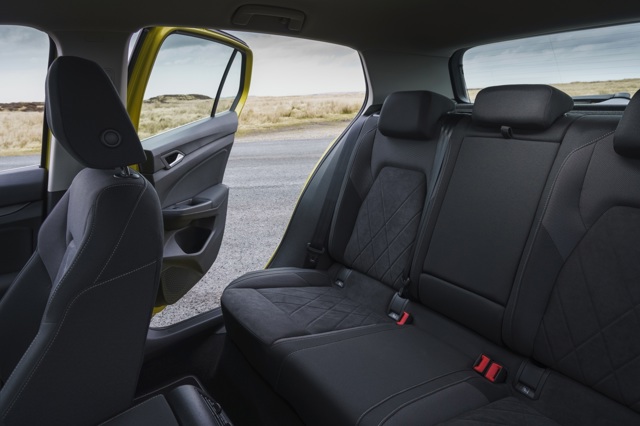
Things aren't so impressive in the back. Sure, there's still plenty of headroom and a decent amount of legroom for two adults, and three can fit without too much of an issue for short journeys. But sit in the back of the SEAT Leon or Skoda Octavia and you'll realise both have more generous knee room because they have a longer wheelbase than the Golf. You do get a centre armrest (front and rear) in every model at least, whereas base model Leons don't.
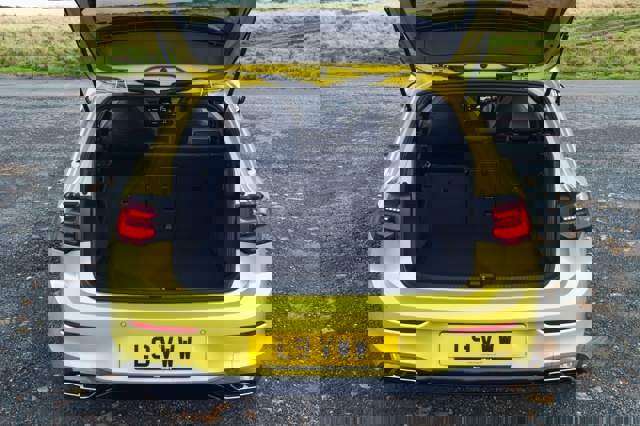
The boot capacity is about average for the class, but it certainly isn't the biggest at 381 litres with the seats up. That's about the same as a Ford Focus and Seat Leon, but the Honda Civic and Skoda Octavia both offer substantially more space. You do get a height-adjustable boot floor on every model except the hybrids, though, allowing you to remove the step when sliding items out and have a secure storage area underneath.
Volkswagen Golf 2026: Quality and finish
Previous generations of the Golf have set the benchmark for cabin quality: Volkswagen always seemed to spend that little bit extra on the materials and finish that made it feel like a more expensive car than rivals.
Broadly speaking, that's still the case with the latest Golf. But not only have rivals really caught up in the last few years, the Mk8 Golf has also seen some sneaky cost cutting. Perhaps this is how the VW Group pays its Dieselgate bills?
For the most part it feels well-finished, and a noticeable step up over its Seat and Skoda siblings, as well as cars such as the Ford Focus. The minimalist design makes it easy on the eye, while what switchgear there is feels nicely damped and built to last. The fabric door trims are also more upmarket than the rather cheap plastic items in the Leon, and the neat adjustable cupholders are a nice touch.
But whereas the old Mk7 Golf had no weak points whatsoever, feeling plush and solid even down on the bits you rarely touch, there are some cheaper elements in the Mk8. For example, the lower half of the door cards feel a bit flimsy, while some of the plastics on the centre console and upper dash aren't as nice to touch as you might expect. We'd like more splashes of colour, too.
Overall, it's still very good. But it's not quite the best in class any more - that honour goes to the brilliantly stylish and upmarket cabin of the latest Mazda 3.
Volkswagen Golf 2026: Infotainment
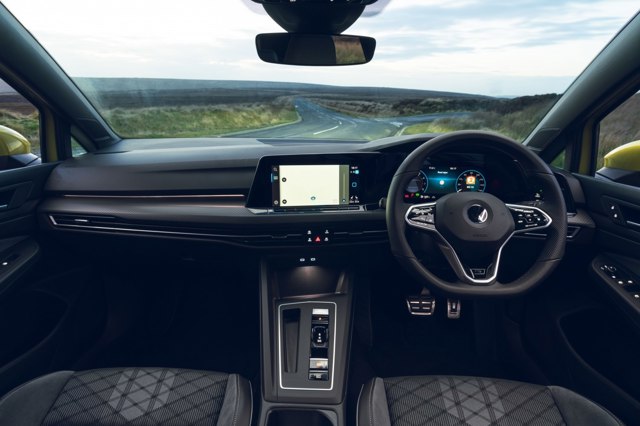
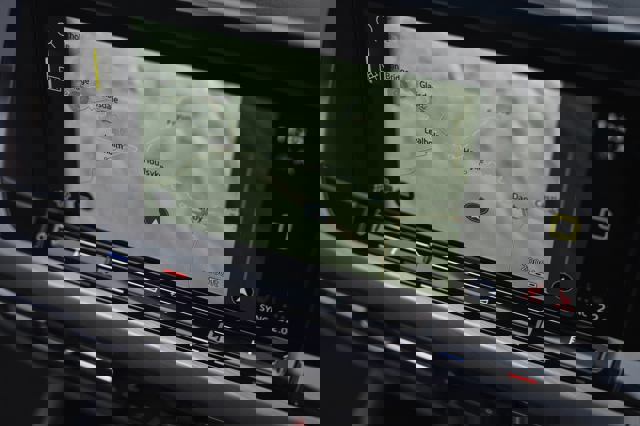
This is probably the most controversial area of the latest VW Golf. Unlike the previous car which offered varying screen sizes depending on your trim level, all Golfs get the same 10-inch touchscreen positioned high up on the dash in your eyeline, flanked with a touch sensitive slider panel for the temperature and volume control.
Visually, it looks great: nicely integrated, with a bright and clear screen. But the more time you spend with it, the more issues start to emerge. Firstly, the lack of physical shortcut buttons becomes frustrating on the move as you try to operate even basic features. The touch panel underneath often needs several prods to respond, whereas a simple knob for the temperature or the volume would be simplicity itself. Worse still, it's not backlit, so it's totally unusable at night. How bizarre.
Then there's the over-complicated areas of the infotainment. Things such as changing the radio station and setting the sat-nav aren't too bad, but turning the lane assist or traction control off is such a complex affair, it's almost as if VW is deliberately trying to stop you doing so.
Worse still, the screens in a number of early Golf press cars would glitch, lag or freeze completely. Volkswagen has released some updates since, but it's not clear if they've totally eradicated the problem. At least Android Auto and Apple CarPlay are standard, so you can bypass the system if you can get them to load.
Volkswagen Golf value for money
Volkswagen Golf 2026: Prices
Roughly speaking, the Volkswagen Golf is around 10% more expensive on list price terms than a SEAT Leon. That'll be reflected in monthly payments, too, although the Golf is pretty competitive with most rivals in that respect because of its strong residual values.
Having said that, VW's refusal to offer a truly low-spec variant means, while many other rivals start at around the £20,000 mark (or less for some models) the Golf commands a premium.
The entry point is the 1.0 TSI in Life trim, which when fitted with a six-speed manual gearbox costs £23,625. The seven-speed DSG automatic is around £1,900 more, which sounds steep, but you also get a mild hybrid system with that car (badged eTSI) to help boost fuel economy and reduce emissions.
Given the four-cylinder 1.5 TSI petrol is a mere £650 or so more than the 1.0-litre, we'd be tempted to upgrade. The cheapest diesel (the 110PS 2.0 TDI) is £25,250.
In terms of trim levels, base Life is pretty well equipped and even gets the Digital Cockpit as standard, but we reckon the Active trim is a worthwhile upgrade. For a touch over £500 on top of Style, it brings a number of extra style and convenience features that will make it easier to live with and, if you buy outright, easier to sell on.
Mid to high-grade Style trim adds some high-end tech features (such as Travel Assist, a semi-autonomous driver aid) that will be desirable to many, plus bigger wheels and nicer seats. You can't get the 1.0 TSi engine with this trim, so spec-for-spec it's around £1,100 more than Active.
Finally, R-Line trim gives the Golf a noticeable sportier look, with bespoke exterior styling details, Yopu also get sports seats and sports syspension, while a drive mode select function also features alongside other interir details. It's not cheap, though, pushing the base price up to nearly £27,000 and pushing the diesel automatic model to over £30,000.
Then there's the hybrid models. The 'base' 204bhp e-Hybrid is just over £33,000 and only available in Style trim, while the hotter GTE model gets a unique exterior and interior look, 245PS and sports suspension from £36,000.
The performance models start at £33,500 for the 200PS, auto-only diesel GTD, with the 245PS petrol GTi in manual form is around £500 more. The 300PS GTi Clubsport is £38,000, while the limited-run Clubsport 45 takes the list price over £40,000.
Interestingly, the GTI Clubsport 45 is nearly £700 more than the 320PS, four-wheel drive R model, although you do get a lot of kit thrown in as standard in the former.
Volkswagen Golf 2026: Reliability and running costs
There isn't a single version of the latest Volkswagen Golf that could be considered thirsty: even the performance models are pretty respectable.
The cheapest 1.0 TSI petrol manages between 48-52mpg on the WLTP test cycle, which should be fairly achieveable. However, the auto-equipped eTSI, with its mild hybrid system harvesting energy, boosting the engine and improving the stop/start function, improves those figures by around 5%.
Interestingly, the 1.5 TSI manages pretty much exactly the same figures on paper as the 1.0-litre, whether it's a DSG or a manual. It's probably because it doesn't need to be worked as hard as the 1.0-litre to get up to speed, with a meatier low-end torque delivery. The 150PS version of the 1.5 TSI drops a couple of MPG on the 130PS version, but that's hardly a deal breaker.
The diesel is the star of the show on the pure combustion side, promising between 59-63mpg. But the hybrids, of course, are in a different league promising between 235 (GTE) and 256mpg (e-Hybrid). That figure needs to be taken with a rather large pinch of salt, though, as if you're not charging up the battery regularly you won't see anything near those figures.
The GTD diesel will suit high mileage drivers after a bit of performance, managing between 52 and 54mpg. The petrol GTI, meanwhile, is still pretty good given its pace, promising 37-38mpg. The Clubsport models claim the same figures despite the extra power.
The rapid, four-wheel drive R version is of course the thirstiest. But 35-36mpg is still not to be sniffed at given it's faster than 90% of cars on the road.
Satisfaction Index
 What is your car like to live with?
We need your help with our latest Satisfaction Index, so that we can help others make a smarter car buying decision. What's it like to live with your car? Love it? Loath it? We want to know. Let us know about your car - it will only take a few minutes and you could be helping thousands of others.
Help us with the Honest John Satisfaction Index nowVolkswagen Golf models and specs
The entry-level VW Golf is Life trim. It gets 16-inch alloy wheels, LED headlights, climate control, keyless start and multi-colour ambient lighting. The 10-inch touchscreen is the same as every other Golf, too, featuring sat-nav, Bluetooth, DAB radio, Apple CarPlay and Android Auto, while you also get wireless phone charging and the Virtual Cockpit digital instruments. Safety kit includes adaptive cruise control, lane assist, front and rear oparking sensors and Car2X connected services.
Step up to Active trim and you get a new design of 16in alloys, tinted windows, a welcome light projection, a heated steering wheel, decorative dash inserts, heated front seats, three-zone climate control and 30-colour ambient lighting. Heated washer jets also feature.
Style trim brings 17-inch alloys and additional exterior design upgrades, such as a full-width LED light strip across the front of the car. It also gets more advanced LED 'Plus' headlights with a cornering function, upgraded seats and upholstery, memory functions for the door mirrors with puddle lights, plus some extra driver assist features including Travel Assist. This can accelerate, brake and steer itself (under close supervision) on suitable roads.
Top R-Line models bring unique styling details and further illuminated elements inside and out, alongside sports seats with integrated headrests, sports suspension, a drive mode selector and progressive steering.
| Dimensions | |
|---|---|
| Length | 4284–4633 mm |
| Width | 2027–2073 mm |
| Height | 1484–1498 mm |
| Wheelbase | 2620–2669 mm |
| Miscellaneous | |
|---|---|
| Kerb Weight | 1264–1830 kg |
| Boot Space | 374–1845 L |
| Warranty | 3 years / 60000 miles |
| Servicing | 9300–10000 miles |
| Costs | |
|---|---|
| List Price | £23,300–£32,790 |
| Insurance Groups | 15–27 |
| Road Tax Bands | A–E |
| Official MPG | - |
| Euro NCAP Safety Ratings | |
|---|---|
| Adult | - |
| Child | - |
| Pedestrian | - |
| Overall | - |
Model History
- October 2019: 2020 Volkswagen Golf revealed
- December 2019
- February 2020: Volkswagen Golf prices announced
- March 2020: Orders open for R-Line trim and eTSI mild-hybrid engines
- May 2020: 1.0 TSI engine added to Volkswagen Golf range
- September 2020: Volkswagen Golf GTE and mild-hybrid 1.0 eTSI announced
- April 2021: Volkswagen Golf Active special edition priced from £23,860
- April 2021: Volkswagen Golf eHybrid Style priced from £32,995
October 2019
2020 Volkswagen Golf revealed
Volkswagen has officially launched the eighth-generation Golf. The new compact family hatch will reach UK showrooms in 2020 and feature lower running costs, hybrid power and a futuristic digital cabin.
The 2020 Volkswagen Golf will compete against the Ford Focus, Honda Civic and Vauxhall Astra, but offer more choice with buyers getting the choice of petrol, diesel, hybrid or plug-in hybrid powertrains. Fuel economy figures and CO2 ratings are still to be confirmed, but Volkswagen says fuel costs will be up to 17 per cent lower than the outgoing Golf.
The four-cylinder 2.0 TDI turbodiesel is available with outputs of 115PS or 150PS and will be "amongst the world's cleanest combustion engines", according to Volkswagen, with a twin dosing dual AdBlue injection system reducing harmful nitrogen oxide emissions (NOx) by up to 80 per cent. A high performance GTD will be launched in late-2020.
The petrol engines start with the familiar three-cylinder 1.0 TSI - with 90PS or 110PS - while the four-cylinder 1.5 TSI has outputs of 130PS or 150PS. Almost all of the petrols get the option of a mild hybrid system - badged eTSI - with a 48-volt motor and battery pack harvesting energy under braking and boosting fuel economy by using the captured energy to assist the engine.
The Golf GTE will be the only version that will connect to the mains via a plug, with the electric Golf being dropped from the range to make room for the ID.3.
The GTE's hybrid system - an electric motor linked to the 1.4 TSI petrol engine - develops 245PS and gets a more powerful 13kWh lithium battery pack that will allow it to travel further on pure electric power, although Volkswagen hasn't said what the improvement will be over the existing 31-miles you get with the outgoing model.
The powerful 2.0 TSI will be added to the range in late-2020 when the GTI is expected to be launched, while the potent 4Motion R version of the Golf will arrive in early-2021. Until then, the GTE version of the Golf will be the most powerful version on sale at launch.
All hybrid versions are automatic only, with the GTE using a six-speed DSG gearbox while the eTSI petrols are linked to a seven-speed DSG 'box. All of the other petrol and diesels will use a new six-speed manual transmission as standard.
Buyers get the choice of four trim levels - S, SE, SEL and R-Line - and all models get LED exterior lighting and a 10-inch infotainment as standard. The interior shows a significant reduction in cabin clutter, with almost all of the buttons from the dashboard being replaced with touch sensitive controls.
A fully digital instrument cluster is also standard across the range, while an optional Ask Alexa voice control system will allow the driver to browse music or check the weather reports without taking a hand off the wheel.
As you might expect, Volkswagen has refreshed the Golf's already comprehensive array of driver aids, which now includes a semi-autonomous cruise control system that will control the brakes, acceleration and steering on the motorway. A Car2X system will also allow the car to communicate with other Golfs - within a range of 800 metres - to warn the driver of potential road hazards or traffic delays.
Volkswagen hasn't released any specifications about the size of the interior or the boot, but the new-gen Golf will be 29mm longer than the outgoing model - now 4284mm - while the car's width has been shaved by a single millimetre to 1789mm.
December 2019
Five Star Euro NCAP comprising 95% Adult Occupant protection; 89% Child Occupant protection; 76% Vulnerable Road User protection (pedestrians, cyclists, etc.); and 78% Safety Assist.
February 2020
Volkswagen Golf prices announced
|
Model |
Engine |
Fuel economy |
CO2 (g/km, WLTP min, max) |
CO2 (g/km, NEDC) |
Price |
|
Golf Life |
1.5 TSI 130 PS 6-spd man |
49.6 – 52.3 |
122 – 130 |
108 |
£23,875 |
|
Golf Life |
1.5 TSI 150 PS 6-spd man |
47.9 – 51.4 |
125 – 134 |
110 |
£24,475 |
|
Golf Life |
2.0 TDI 115 PS 6-spd man |
62.8 – 67.3 |
110 – 118 |
91 |
£24,875 |
|
Golf Style |
1.5 TSI 130 PS 6-spd man |
49.6 – 51.4 |
124 – 130 |
110 |
£25,470 |
|
Golf Style |
1.5 TSI 150 PS 6-spd man |
47.1 – 49.6 |
128 – 136 |
112 |
£26,090 |
|
Golf Style |
2.0 TDI 115 PS 6-spd man |
62.8 – 65.7 |
113 – 118 |
93 |
£26,470 |
|
Golf Style |
2.0 TDI 150 PS 7-spd DSG |
60.1 – 62.8 |
117 – 122 |
99 |
March 2020
Orders open for R-Line trim and eTSI mild-hybrid engines
R-Line features bespoke body styling, 17-inch Valencia alloy wheels, rear tinted windows and sports suspension. On the inside, the R-Line features front sports seats, an R-Line multifunction steering wheel and brushed stainless steel pedals. Ambient lighting allows the driver to choose from 30 different colours.
The R-Line, plus the already on sale Golf Life and Golf Style trims, are now available with Volkswagen’s new eTSI mild hybrid powertrain. This combines a 1.5-litre, 150PS TSI engine to a mild hybrid system, comprising a 48-volt lithium-ion battery and 48-volt belt starter generator. The starter generator takes on the role of the alternator and starter, and also operates as a small electric motor providing a boost when pulling away. The generator also starts the TSI engine, with the system allowing the car to coast with the engine shut off as much as possible while the car is in motion, for optimal efficiency, while ensuring almost imperceptible transitions between engine-off coasting and engaging the petrol engine.
|
Model |
Engine |
Fuel economy |
CO2 |
CO2 |
Price |
|
Golf Life |
1.5 eTSI 150 PS 7-spd DSG |
44.8 – 49.6 |
130 – 142 |
106 |
£26,375 |
|
Golf Style |
1.5 eTSI 150 PS 7-speed DSG |
44.8 – 47.9 |
134 - 142 |
108 |
£27,970 |
|
Golf R-Line |
1.5 TSI 130 PS 6-spd man |
50.4 – 51.4 |
125 - 128 |
110 |
£26,140 |
|
Golf R-Line |
1.5 TSI 150 PS 6-spd man |
47.9 – 49.6 |
130 - 135 |
112 |
£26,740 |
|
Golf R-Line |
1.5 eTSI 150 PS 7-spd DSG |
46.3 – 47.1 |
135 - 138 |
108 |
£28,640 |
|
Golf R-Line |
2.0 TDI 150 PS 7-spd DSG |
61.4 – 62.8 |
118 - 120 |
99 |
£29,860 |
May 2020
1.0 TSI engine added to Volkswagen Golf range
This new engine will be offered with a six-speed manual gearbox and only with Life trim, priced at £23,300.
With the compact, three-cylinder 1.0-litre turbocharged engine installed, the Golf is able to sprint to 62 mph from standstill in 10.2 seconds, before going on to a top speed of 126mph. The new engine results in the Golf being capable of returning between 49.6-53.3 mpg on the combined WLTP cycle, while emitting between 121-129 g/km of CO 2 on the WLTP cycle.
September 2020
Volkswagen Golf GTE and mild-hybrid 1.0 eTSI announced
Orders are now open for the 245PS Volkswagen Golf GTE which combines a 150PS 1.4-litre petrol engine with a 110PS electric motor and 13kWh battery pack.
Capable of travelling under electric power alone for 32 miles, the 245PS, 400Nm Golf GTE reaches a top speed of 140 mph, after a sprint from 0-62 mph is dispatched in 6.7 seconds. Most impressive of all is the Golf GTE’s efficiency: 176.6 mpg on the combined cycle; and 36 g/km of CO2 emissions (WLTP). The Golf GTE is priced from £35,960.
Compared with the previous Golf GTE, the Golf 8 GTE’s battery pack is 50% larger, at 13kWh, with a usable range in electric-only E-MODE of 32 miles (WLTP). The GTE features a purpose-built 6-speed DSG transmission, developed specifically for use with plug-in hybrid models.
A new drivetrain for the regular Golf model is also made available today, with the 1.0-litre eTSI 110 PS. This variant, available exclusively on the Golf Life trim, boasts impressive fuel economy of 54.3mpg and CO2 emissions of 118g/km, making it the most frugal petrol-only option in the Golf 8 range, as well as the most affordable DSG-equipped option, at £25,190.
The Golf eTSI reaches 62 mph from a standstill in 10.2 seconds, with a top speed of 126 mph. The mild hybrid system comprises a 48-volt lithium-ion battery and 48-volt belt starter generator. The starter generator takes on the role of the alternator and starter, and also operates as a small electric motor providing a boost when pulling away. The generator also starts the TSI engine, with the system allowing the car to coast with the engine shut off as much as possible while the car is in motion, for optimal efficiency, while ensuring almost imperceptible transitions between engine-off coasting and engaging the petrol engine.
April 2021
Volkswagen Golf Active special edition priced from £23,860
Based on the Life model, the Active adds heated front seats; climate control; 30-colour ambient lighting; and carpet mats front and rear.
|
|
|||||||||
|
Golf ACTIVE |
|||||||||
|
Model |
Price (RRP OTR) |
0-62 mph |
Top speed |
CO 2 (WLTP combined) |
Fuel consumption (WLTP combined) |
||||
|
1.0 TSI 110 PS 6-spd manual |
£23,860 |
10.2 |
126 mph |
121 g/km |
52.8 mpg |
||||
|
1.0 eTSI 110 PS 7-spd DSG |
£25,750 |
10.2 |
126 mph |
119 g/km |
54.1 mpg |
||||
|
1.5 TSI 130 PS 6-spd manual |
£24,460 |
9.2 |
133 mph |
123 g/km |
52.2 mpg |
||||
|
1.5 eTSI 130 PS 7-spd DSG |
£26,350 |
9.4 |
132 mph |
124 g/km |
51.5 mpg |
||||
|
1.5 TSI 150 PS 6-spd manual |
£25,060 |
8.5 |
139 mph |
127 g/km |
50.5 mpg |
||||
|
1.5 eTSI 150 PS 7-spd DSG |
£26,950 |
8.5 |
139 mph |
127 g/km |
50.5 mpg |
||||
|
2.0 TDI 115 PS 6-spd manual |
£25,460 |
10.2 |
126 mph |
119 g/km |
62.5 mpg |
||||
|
2.0 TDI 115 PS 7-spd DSG |
£26,960 |
10.4 |
126 mph |
119 g/km |
62.5 mpg |
||||
April 2021
Volkswagen Golf eHybrid Style priced from £32,995
Orders are now open for the new Golf eHybrid Style model. Priced from £32,995, and offering CO2 emissions of 21g/km (WLTP) and fuel economy of up to 235mpg (WLTP, combined) – as well as a pure-electric range of 44 miles on a full charge – the brand says the new 204PS Golf eHybrid is set to expand significantly the appeal of its plug-in hybrid offerings.
The new five-door Golf becomes available in the UK as Volkswagen works to broaden already-strong interest in its plug-in hybrid Golf, which to this point has been represented here solely by the sporty Golf GTE. Sitting beneath the 245PS GTE, the new 204PS eHybrid model is offered exclusively in ‘Style’ trim.
Comprising a 1.4-litre TSI petrol engine, an electric motor and a lithium-ion battery that is located beneath the rear bench seat, the 204PS Golf eHybrid produces maximum torque of 350Nm practically from a standing start. Channelled to the front wheels via a six-speed DSG transmission, that is enough to propel this new model from rest to 62mph in 7.4 seconds, before going on to a top speed of 137mph (where permitted).
|
Golf eHybrid |
|||||
|
Model |
Price (RRP OTR) |
0-62 mph |
Top speed |
CO 2 (WLTP combined) |
Fuel consumption (WLTP combined) |
|
Style 1.4 204 PS |
£32,995 |
7.4 secs |
137 mph |
21 g/km |
235.4 mpg |
