Best used hybrid cars 2022
.jpg?rmode=max&width=730&height=473)
Hybrid car technology is not new. Some car manufacturers have offered hybrids for more than a decade in the UK, which means there is now plenty of choice on the used market.
There are two main types of used hybrid cars in the UK. Regular hybrids do not need to be plugged in, and are sometimes known as ‘self-charging hybrids’. These can only travel for short distances in pure electric mode.
Plug-in hybrids have much larger batteries and, as a result, can drive much greater distances as zero-emissions electric cars. Because of the greater capacity of their batteries, they have to be plugged in to fully recharge. Unlike fully electric cars, though, they can still be driven even when the batteries run flat.
Here, we look at the best used hybrid cars in the UK, including both regular and plug-in hybrids. The growing diversity of the market means models of all shapes and sizes are represented, from compact city-friendly cars, to premium saloons, to large and luxurious SUVs.
Best used hybrid cars
|
.jpg?width=620)
Volkswagen Golf GTE
The original Volkswagen Golf GTE was launched in 2015 as a plug-in hybrid alternative to the iconic Golf GTI hot hatchback. The ‘E’ stands for ‘electric’ and the car has a pure electric driving range of 31 miles. Impressively, it’s also capable of driving at 70mph as a pure EV, so long as there’s charge in the batteries. When they run flat, a 1.4-litre turbocharged petrol engine takes over (and delivers 0-62mph in 7.6 seconds). The battery can be charged in less than four hours, even from a domestic plug socket. Only available in practical five-door guise, we love the GTE’s sporty styling features and blue-themed plaid seats inside. A touchscreen infotainment system is standard, while LED running lights and 18-inch alloys add some visual pizzazz.
.jpg?width=620)
Toyota Yaris Hybrid
The Toyota Yaris is a very popular car in the UK, particularly in fully automatic Yaris Hybrid guise. This means there are healthy numbers of used models for sale, with prices becoming better value all the time. It was originally launched in 2012, but 2014-on cars are the ones to go for. They benefit from a far-reaching facelift that improves interior quality and driving dynamics. Spot them by their distinctive cross-shape grille. As for the hybrid drive system, an ultra-efficient 1.5-litre petrol engine and electric motor produce CO2 emissions from just 75g/km, plus official fuel economy of more than 85mpg (albeit as measured by the less strict NEDC test cycle used previously).
.jpg?width=620)
Kia Niro
Kia launched the Niro Hybrid in 2016 as an alternative to the ubiquitous Toyota Prius. Unlike the familiar Toyota, Kia chose a more distinctive crossover-style body, with a raised seating position and plenty of space front and rear. The Niro comes in two guises, with the regular ‘self-charging’ hybrid being the most popular. This averages nearly 75mpg in official tests and emits 88g/km of CO2. The plug-in hybrid version has bigger batteries that give a driving range of up to 36 miles, plus even better fuel economy and lower emissions. All Niros have a well-built interior and a commodious 421-litre boot – and most still benefit from the remainder of Kia’s seven-year warranty, too.
.jpg?width=620)
Audi A3 e-tron
The stylish Audi A3 e-tron was launched back in 2014, as the firm’s first mainstream plug-in hybrid. It can travel for up to 31 miles under pure electric power, with a 1.4-litre turbo petrol engine then taking over and offering a total range of almost 600 miles (along with 37g/km CO2 and 176.6mpg fuel economy). Total power of 204hp means it has a decent turn of speed, too. Upmarket to look at and extremely well built inside, the Volkswagen Golf-based A3 e-tron has a decent amount of space for passengers. However, the presence of the batteries beneath the boot floor does mean luggage capacity drops to 280 litres. That compares to 380 litres for a regular A3.
.jpg?width=620)
Toyota Auris
Toyota began offering the second-generation Auris hatchback (now superseded by the Corolla) as a hybrid back in 2013. It used the same drivetrain technology as the Toyota Prius, guaranteeing good fuel-efficiency and low CO2 emissions. We prefer the facelifted models from 2015, which have crisper styling and a better infotainment system, but all share the same 1.8-litre hybrid tech. This emits as little as 79g/km – and within a few years of the hybrid’s launch, it accounted for around half of all Auris sales. It doesn’t even force any compromise on practicality, sharing the same useful 360-litre boot as petrol and diesel versions.
.jpg?width=620)
Mitsubishi Outlander PHEV
The Mitsubishi Outlander PHEV was the world’s first plug-in hybrid SUV when launched in 2013. Official fuel economy of 166mpg sounded incredible, but did require fully-charged batteries to achieve; these give a pure electric range of around 25 miles. The Outlander PHEV’s sheer popularity encouraged Mitsubishi to launch ever-higher trim levels, with top-spec models offering a very luxurious amount of standard kit. Facelifted 2015-on cars are the ones to go for, though, as they look more distinctive and have a better quality interior. They also drive more smoothly and have improved overall refinement.
.jpg?width=620)
BMW 330e
BMW launched the previous-generation 330e plug-in hybrid in 2016. Its electric motor and 2.0-litre turbocharged engine give a total system output of 252hp, and 0-62mph in a swift 6.1 seconds. A 7.6kWh plug-in battery means a 25-mile pure electric driving range, while CO2 emissions are as low as 44g/km. You can spot the 330e by its ‘eDrive’ badges on the C-pillars, and the charging flap in the passenger-side front wing. Note: don’t mistake it for the earlier ActiveHybrid 3. This used a 340hp 3.0-litre petrol engine and small electric motor for sporty performance, but CO2 emissions of 139g/km are actually worse than a comparable non-hybrid diesel.
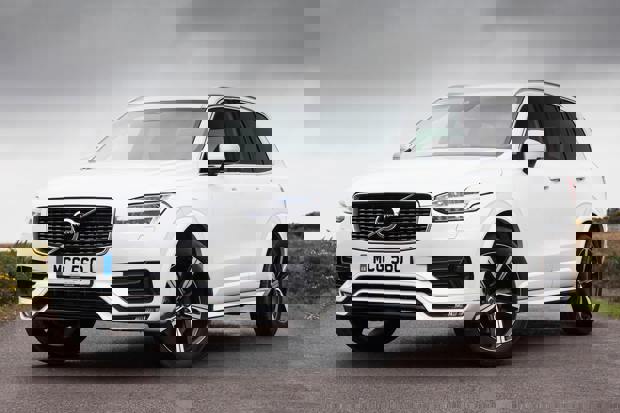
Volvo XC90 T8
The Volvo XC90 T8 ‘twin engine’ plug-in hybrid offers a remarkable blend of performance and economy for such a large and luxurious seven-seat SUV. It produces 407hp for 0-62mph in 5.6 seconds, but also emits just 49g/km CO2 and has a pure electric driving range of 26 miles. It can tow up to 2.4 tonnes as well: a real rarity for plug-in hybrids. The XC90’s timeless, understated looks continue to appeal, and its fantastic interior is a lovely place to spend time – filled with Scandi-cool design and three rows of extremely comfortable seats. An excellent all-rounder.
.jpg?width=620)
Lexus CT 200h
Today, nearly every car sold by Lexus is a hybrid. The firm’s history with the technology goes back years, as it uses systems developed by parent company Toyota. The CT 200h, introduced in 2011, has the same 1.8-litre petrol-electric hybrid system as the Toyota Auris hybrid. At launch, it boasted CO2 emissions of 94g/km, later reduced to 82g/km following a 2014 facelift. Average fuel economy is as high as 78.5mpg. The CT 200h can even be locked into pure electric mode, where it can drive for nearly three miles, so long as speeds are kept below 28mph. The compact Lexus hatchback also has a very well-finished interior and a generous level of standard equipment.
.jpg?width=620)
BMW i3 Range Extender
The BMW i3 is a fun used hybrid car. Launched in 2013, it’s most well-known as a pure electric model, but for years BMW also offered a range-extender version, often called the ‘REX’. This has a tiny 0.6-litre motorcycle engine hidden beneath the rear floor, providing power for when the batteries run flat and duly ‘extending the range’. Early cars had a battery electric range of around 150 miles before the petrol engine kicked in. This improved to around 180 miles after the summer 2016 facelift. The cute, compact BMW i3 is made for the city, with a high seating position, agile handling and great traction from its rear-wheel-drive chassis. The range extender hybrid simply removes the hassle of having to find charge points, particularly for higher-mileage drivers.
Are used hybrids worth it?
Used hybrids can cost a bit more than a comparable petrol or diesel car. However, the savings in fuel costs can certainly make the extra upfront expense worth it, while lower CO2 emissions mean they cost less to tax. If you choose a used plug-in hybrid, you can realise significant savings on fuel, given how much cheaper electricity is than fuel. This will definitely be worthwhile if your typical daily mileage is low enough for the car to be driven solely on battery power.
Are used hybrid cars expensive to maintain?
Both hybrid and plug-in hybrid technologies are very well proven by now. Toyota has sold millions of cars with its Hybrid Synergy Drive system, including the ever-popular Prius. Even after many years, they continue to give reliable, wallet-friendly service. They don’t require particularly expensive maintenance and the batteries of even the earliest hybrid cars are proving to be robust and dependable.
What is the most reliable used hybrid car?
The most reliable used hybrid cars generally come from companies with an already-proven reputation. These include Japanese brands such as Toyota, Honda and Mitsubishi, and Korean brands Hyundai and Kia. However, even if you choose an alternative marque, it is unlikely a hybrid will prove any less reliable than a regular combustion car. Indeed, so trusted is the technology, they may prove a better bet in the long-term. Buy on condition and service history, rather than mileage, and take your time – there are plenty of used hybrid cars to choose from.
What's the best used hybrid for under £10k?