
What older cars are cheap to tax?
.jpg?rmode=max&width=730&height=488)
Drivers generally choose an older car to save money on motoring. Secondhand vehicles will be more affordable to buy due to the effects of depreciation, helping people with limited budgets get on the road.
Because modern cars have never been better-built, older cars can still be really reliable. They should also be good to drive and, if you choose carefully, there will also be plenty of life left in an older car.
Between 2001 and 2017, car tax was based on exhaust CO2 emissions. This means choosing an older car with a low CO2 figure will save you money on road tax.
To help you decide, we have researched 10 older cars that are cheap to tax. Because they have low CO2 emissions, they will also be particularly good on fuel – and achieving more miles to the gallon means you’ll save even more money. A win-win.
What older cars are cheap to tax?
|
.jpg?width=620)
BMW 3 Series
The 2012-on BMW 3 Series was sold in a broad array of versions, including a plug-in hybrid: the 330e. This actually offers free road tax, courtesy of its super-low CO2 emissions. But if you don’t want to pay the premium that buying a used 330e demands, it’s also worth looking at the 316d, 318d and 320d diesel models. These too had very low CO2 emissions, so you’ll pay just £20 or £30 a year to tax them. Their popularity when new means there are plenty on the secondhand market, with earlier models now temptingly priced for what is a great-to-drive and premium-grade car.
.jpg?width=620)
Volkswagen Golf
The Volkswagen Golf, in last-generation Mk7 guise, is another car that was sold as a plug-in hybrid. The Golf GTE therefore enjoys free road tax because of its ultra-low CO2 output. Diesel-engined TDI versions are very competitive as well, particularly the 1.6-litre TDI. Many either cost £20 or £30 in road tax – and one version, the Bluemotion TDI derivative, actually has free tax because of its sub-100g/km CO2 emissions. There was also a Bluemotion TSI petrol version that had £20 road tax thanks to 108g/km emissions. The Mk7 Golf is a high-quality car, with timeless styling and a well-built interior.
.jpg?width=620)
Ford Focus
Ford actually sold a pure electric version of the Focus it launched in 2011, a car that benefits from free road tax. But it’s a very rare sight on the secondhand market, so those seeking a cheap-to-tax Focus are better off looking at 1.0-litre Ecoboost petrol versions. These universally have cheap road tax, costing £20 or £30 a year – and one version, the 100hp model, was available with sub-100g/km CO2 emissions for free tax. There were also sub-100g/km CO2 versions of the 1.5-litre TDCi diesel; look out for cars branded with an ‘Econetic’ badge. The 1.6-litre TDCi diesel Focus is cheap to tax, too.
.jpg?width=620)
Kia Ceed
Kia offered both 1.4-litre and 1.6 CRDi diesel versions of its 2012 Ceed hatchback, and they all enjoy cheap road tax of either £20 or £30 a year. If you’re lucky, you might spot an Ecodynamics version, with sub-100g/km CO2 emissions that mean road tax is actually free. Diesel models are appreciably cheaper to tax than most of the petrols, although Kia did later introduce a 1.0-litre turbo petrol that was very cheap to tax. It too costs £30 a year. Remember, if you buy a Kia younger than seven years of age, you’ll still benefit from some of the firm’s excellent new-car warranty.
.jpg?width=620)
Volvo V40
In 2012, Volvo introduced the V40 five-door hatchback, which quickly became the Swedish firm’s best-selling car. It's a good-looking model with an upmarket interior and a desirable premium badge. Those looking for a cheap-to-tax V40 should seek out the excellent 120hp D2, 150hp D3 or 190hp D4 engines. These were all available in sub-100g/km CO2 form, with a band A vehicle tax rating delivering free road tax. Even the raised-up, SUV-style V40 Cross Country was available with sub-100g/km CO2 emissions – and automatic versions were just as efficient as models with a manual gearbox.
.jpg?width=620)
Nissan Qashqai
The Nissan Qashqai is a well-loved crossover SUV that has regularly been one of the UK’s best-selling cars. In second-generation guise, launched in 2014, it was available with a highly fuel-efficient 1.5-litre dCi 110 turbodiesel engine, with low CO2 emissions that delivered free road tax. Nissan later offered a more powerful 1.6-litre dCi turbodiesel, and this is also cheap to tax, with £30-a-year bills for both manual gearbox and Xtronic automatic guises. Diesel Qashqais are notably cheaper to tax than petrol versions, which explains their continued popularity, despite the general decline in diesel car sales.
.jpg?width=620)
Skoda Octavia
The excellent 2013-on Skoda Octavia is a secondhand family car par excellence. It is well-priced, reliable and robust – and there’s little to beat it in terms of practicality. The interior is huge and the boot is truly vast, with acres of room both with the seats up and folded down. All of this doesn’t come with expensive road tax, though. The 1.6-litre TDI turbodiesel engine can be bought in sub-100g/km CO2 guise, giving a band A rating and free tax. If you prefer petrol, the 1.0-litre TSI engine has really low CO2 emissions, for modest road tax of £20 a year.
.jpg?width=620)
Audi A3
The Audi A3 is another popular used car. It’s good looking, with a very high quality interior, and buyers love the sophisticated image of Audi. In this 2012-on generation of A3, the company even offered a plug-in hybrid version, the e-tron, which both underlined the ‘Vorsprung durch Technik’ (‘progress through technology’) branding and benefited from free road tax. More affordable routes to free tax are the lower-CO2 versions of the 1.6-litre TDI diesel, while the really fuel-efficient 1.2-litre TFSI petrol engine has road tax costing from £20 a year. This was later followed by a 1.0-litre engine, which is similarly cheap to tax.
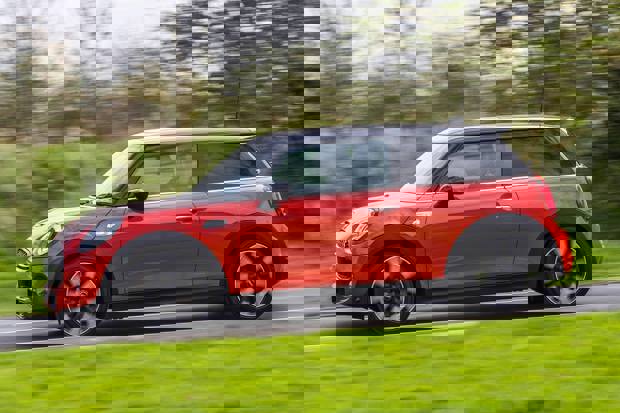
MINI Hatch
The MINI Hatch is a desirable premium city car that, in 2014-on guise, was available with a number of super-efficient diesel engines. The vast majority of them benefit from free road tax, courtesy of their low CO2 emissions and band A VED rating. Our pick of the range is the Cooper D, but there’s also a high-performance Cooper SD that, while not free, is still very cheap to tax. Because of their efficiency, diesel-engined MINIs were popular in the 2010s, so there should be plentiful stock to choose from on the used car market. You’ll be amazed at the sheer number of customisation options open to MINI buyers.
.jpg?width=620)
Renault Zoe
The Renault Zoe was one of the original mainstream electric cars. Thanks to zero tailpipe emissions, it has always enjoyed free road tax: a benefit that continues to this day. Not only is the Zoe tax-free, but other charges will be cheap, too. It’s exempt from all low emission zone charges, for example, and some cities still offer free parking for electric cars. Because it was an affordable EV when new, there are lots to choose from on the secondhand market – just watch for Renault’s battery lease initiative, which adds a bit of complication to buying certain used Zoes. You may still need to pay a monthly battery lease fee.
What age does a car get free road tax?
If you’re looking at classic cars, vehicles aged 40 years or older are entitled to free road tax. Owners have to apply each year for it, but they won’t pay a penny. They do also have to register in advance, though. The 40-year cut-off works on a rolling basis, so more cars are added each year to the roster of vehicles with free road tax. If you’re a classic car enthusiast, it’s a brilliant way to save money.
Which cars have low or no road tax?
Road tax between 2001 and 2017 was based on CO2 emissions from the exhaust tailpipe. Cars fell into different bands, with band A being the lowest: cars in this category get free road tax. Band B cars cost £20 a year and Band C costs £30 a year. Once CO2 emissions rise above 120g/km, costs begin to ratchet up appreciably, so it’s worth looking for the lowest CO2 cars if you want to avoid paying road tax.
Is road tax cheaper for older cars?
For cars registered before 2001, road tax was based on engine size. There is one rate for cars up to 1.6 litres, then another for engines larger than this. Road tax is not cheaper for older cars compared to newer low-CO2 models, though: smaller-engined pre-2001 vehicles are charged £170 a year, while larger-engined cars cost £280 a year. This is significantly greater than the £20 a year a lower-CO2 model can cost. Only when a car hits 40 years old will it be zero-rated for road tax, meaning owners can finally save.
