
Hyundai Tucson (2015 – 2021) Review

Hyundai Tucson (2015 – 2021) Verdict

 More refined than ix35. Cabin is spacious and comfortable. Lots of family appeal with affordable running costs and huge boot. Five star Euro NCAP rating.
 Not the sharpest SUV to drive. Some cheap and scratchy plastics in the cabin. Ride can get a bit bumpy on poor roads.
Find out more about the Hyundai Tucson (2015 – 2021)
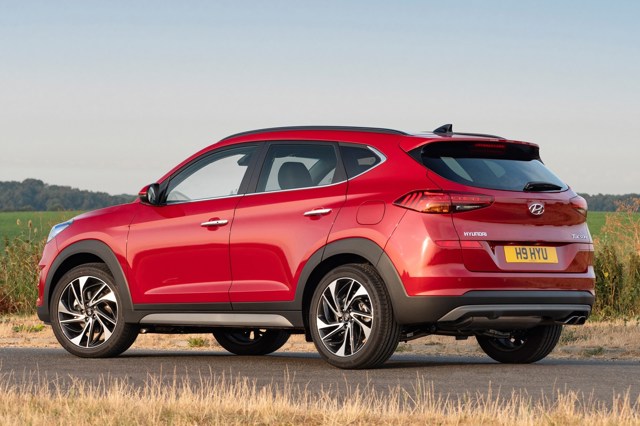
Stylish and good value, the Hyundai Tucson is a crossover that has lots of family appeal. Much of that is down to its large interior, refined ride and affordable price.
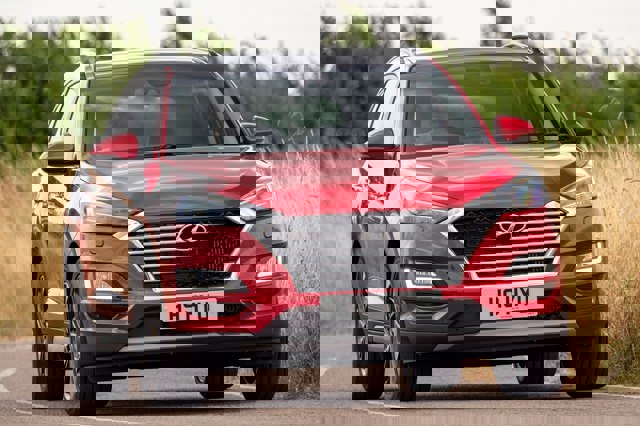
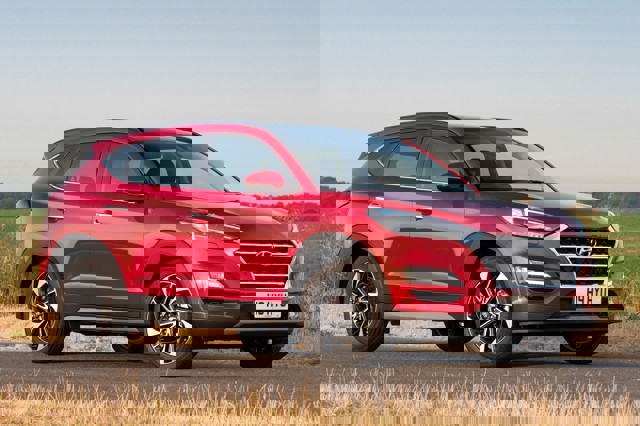
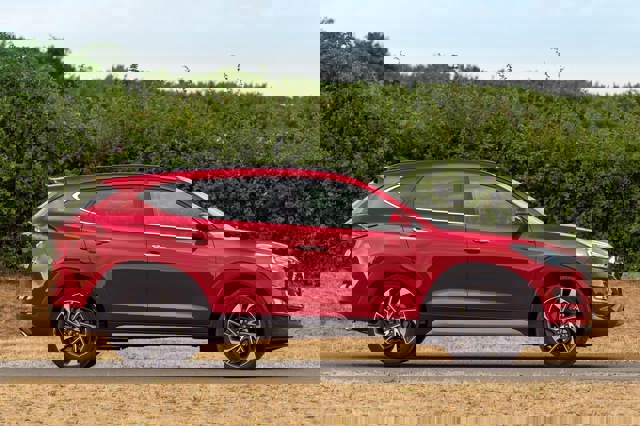
Replacing the ix35 in the Hyundai SUV line-up the Tucson offers more space and equipment than its predecessor. It has a more purposeful look, with an aggressive design that has an imposing front grille, large wheel arches and bulging bodylines. As a result it looks a lot more like an off-roader compared to the curvy styling of the ix35.
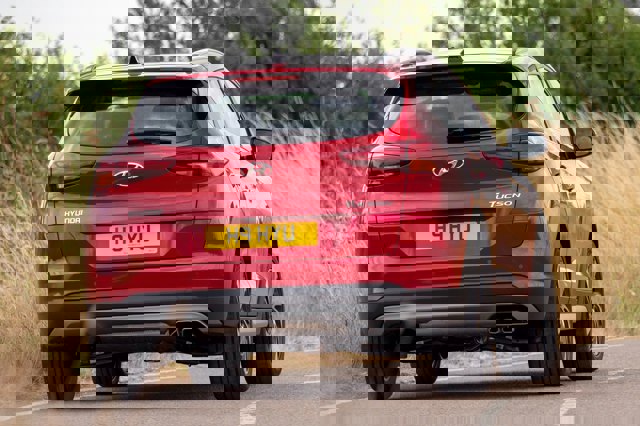
The Tucson is well-equipped and all models get alloy wheels, a rear spoiler, automatic headlights, LED daytime running lights and steering wheel controls. It also gets Hyundai's unlimited mileage five year warranty, which is still one of the best in the business, compared to the conventional three year/60,000 mile warranties.
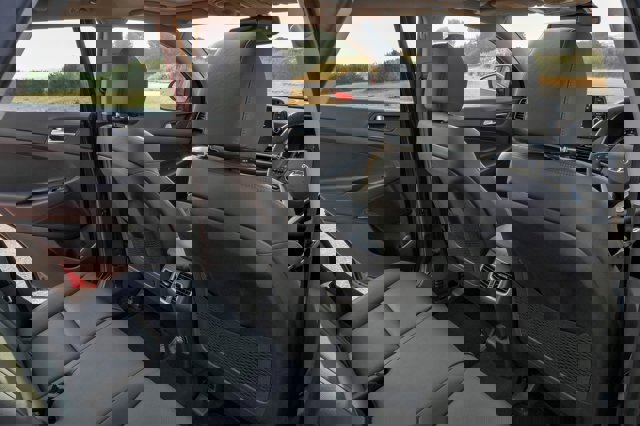
The cabin of the Tucson is durable and spacious, but slightly let-down by the occasional splash of dull and scratchy plastics. The large, comfortable seats have lots of lower leg and upper back support though, while the wide base allows up to three adults to sit across the rear bench. There's no shortage of leg room either, which means the driver can push their seat back a considerable distance without squashing the legs of those in the back.
There are five engines to choose from – two petrol and three diesels - and the most economical option is the 1.7 CRDi with 116PS which returns a claimed 61.4mpg. If your annual mileage doesn't warrant diesel power then there's an entry-level 1.6-litre petrol which is also front-wheel drive.
Fuel consumption for the more powerful 1.6-petrol and 2.0-litre diesels is less impressive, although they do give the Tucson a considerable boost in straight-line performance and also get four-wheel drive. However, even with this, the Tucson is never involving or fun to drive, due to its overly light steering and lack of feedback in the corners.
That said, the Tucson is a good value crossover that's practical and easy to live with. What's more, if you opt for one of the lower trim models - like SE Nav - you'll get a well-equipped car that will give all of the practically, comfort and refinement of a premium car, but for a fraction of the price.
If you're looking for the newer version, you need our Hyundai Tucson review.
Reviews for Hyundai Tucson (2015 – 2021)'s top 3 rivals
.jpg?width=240&height=160&rmode=crop)

Hyundai Tucson (2015 – 2021) handling and engines
- Engines range from 1.6 GDI to 2.0 CRDi Mild Hybrid 4WD
- Readers report Real MPG to be between 25–55 mpg
They Hyundai Tucson is available with five engines – two petrol and three diesels - and uses two-wheel or four-wheel drive, dependant on how powerful the engine is.
The best - and cheapest - option is the 1.7 CRDi, which is front-wheel drive and produces 116PS with 280Nm of torque. It's quiet, refined and economical with up to 61.4mpg according to the official figures. The engine does need to be worked hard for overtaking, but is more than adequate for general motorway driving and has plenty of low-down torque for smooth acceleration in and around town.
If your annual mileage doesn't warrant diesel power then you can opt for the 1.6-litre petrol with either 136PS or 177PS. The petrols are powerful enough - especially the 177PS - but as you'd expect economy isn't as good. The 136PS returns a claimed 44.8mpg and the 177PS version - which has four-wheel drive - is more expensive to run with a claimed 37.2mpg and 177g/km. We also noted that the petrol engine gets rather noisy on the motorway, especially at higher revs.
The 2.0 CRDi with 185PS on the other hand is quiet and smooth at all speeds. It's also packed with 400Nm of torque from 1750rpm, which means it’s ideal for overtaking or towing, with a braked limit of 2200kg. The 2.0 diesel is also available with 136PS, but this reduces towing capacity to 1900kg.
As they're all four-wheel drive - the 2.0 CRDi models are not as efficient as the 1.7 CRDi, with the 136PS and 185PS units returning a respective 58.9mpg and 47.9mpg. The four-wheel drive system gives the Tucson some off-road potential, with a locking differential, but it's never suited for serious mud plugging due to its relatively poor ground clearance.
In reality, the vast majority of Tucsons will never leave the road and it is here it impresses, with a refined ride that’s smooth and supple. Admittedly, rough A roads or potted motorways will unsettle the ride a little, making things a touch bumpy for those in the back. But for the most part the Tucson is a comfortable car to while away the miles. A slick six-speed manual gearbox is standard on all models, although a six-speed automatic is available as an option.
The only real downside is the handling, with lifeless steering that returns little in the way of feedback. As a result the Hyundai isn’t as fun or engaging to drive as a Ford Kuga or Nissan Qashqai. But the Tuscson shouldn't be marked down too much. Indeed, it is safe and predictable, while body lean is kept to a minimum on all but the tightest of B roads.
| Engine | MPG | 0-62 | CO2 |
|---|---|---|---|
| 1.6 CRDi 115 | 58 mpg | 11.8 s | 129–130 g/km |
| 1.6 CRDi 115 Mild Hybrid | - | 11.2–11.8 s | 114 g/km |
| 1.6 CRDi 136 | 58 mpg | 11.2 s | 129 g/km |
| 1.6 CRDi 136 DCT | 59 mpg | 11.8 s | 125 g/km |
| 1.6 CRDi 136 Mild Hybrid | - | 11.2–11.8 s | 113–115 g/km |
| 1.6 GDi | 45 mpg | 11.5 s | 147–177 g/km |
| 1.6 GDI | 40–40 mpg | 11.5 s | 162 g/km |
| 1.6 T-GDi 177 | 38–39 mpg | 8.9–9.2 s | 169–173 g/km |
| 1.6 T-GDi 177 DCT | 40–40 mpg | 8.9 s | 151–165 g/km |
| 1.6 T-GDi 4WD | 37–39 mpg | 9.2–9.5 s | 169–177 g/km |
| 1.6 T-GDi 4WD Automatic | 38–40 mpg | 8.9–9.1 s | 165–177 g/km |
| 1.7 CRDi | 62 mpg | 13.7 s | 119 g/km |
| 1.7 CRDi DCT | 58 mpg | 11.5 s | 129 g/km |
| 1.7 T-GDi 116 | 62 mpg | 13.7 s | 119 g/km |
| 1.7 T-GDi 141 DCT | 58 mpg | 11.5 s | 129 g/km |
| 2.0 CRDi | 59 mpg | 10.6 s | 127 g/km |
| 2.0 CRDi 4WD | 48–54 mpg | 9.9–10.9 s | 139–154 g/km |
| 2.0 CRDi 4WD Automatic | 44–47 mpg | 9.5–12.0 s | 156–170 g/km |
| 2.0 CRDi Mild Hybrid 4WD | 50 mpg | 9.5 s | 153–154 g/km |
Real MPG average for the Hyundai Tucson (2015 – 2021)

Real MPG was created following thousands of readers telling us that their cars could not match the official figures.
Real MPG gives real world data from drivers like you to show how much fuel a vehicle really uses.
Average performance
74%
Real MPG
25–55 mpg
MPGs submitted
414
Hyundai Tucson (2015 – 2021) interior
- Boot space is 488–1503 litres
- Euro NCAP rating of five stars
| Dimensions | |
|---|---|
| Length | 4475 mm |
| Width | 1850–2065 mm |
| Height | 1620–1650 mm |
| Wheelbase | 2670 mm |
The Tucson might be the smallest SUV in the Hyundai range, but you wouldn't think it when sitting inside the large and airy cabin. Indeed, the Tucson has a super interior, with lots of head and leg room for all passengers. What's more, most models get a flat 513-litre boot that can be extended to a useful 1503 litres by lowering the rear seats. Using the boot is easy with a low entry sill that prevents you from having to lift heavy items high to load up.
Families will find the Tucson particularly useful, with lots of cabin space and storage. There are lots of areas to keep loose items, with deep door pockets, large cup holders and a handy set of hooks in the boot that lets you hang shopping bags without worrying about them falling over and scattering their contents all over the floor.
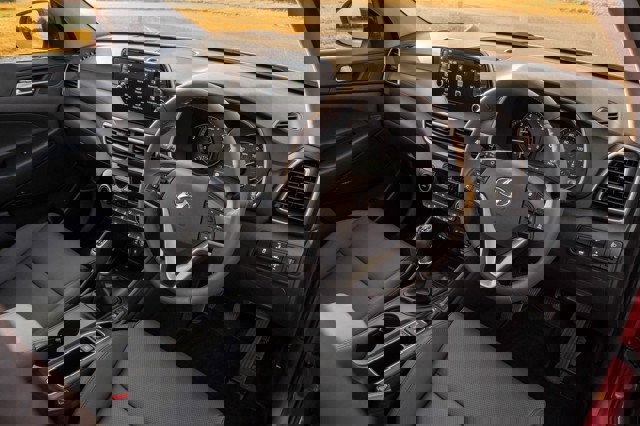
The attention to detail is high, with a solid feel throughout the interior. As a result there's no worrying creaks or squeaks as you navigate bumpy roads. The dashboard layout is also neat and simple, with soft-touch materials covering the upper layer. However, the interior ambience is spoilt a little by dull and scratchy plastics that cover the lower dashboard and surround the climate controls and window switches.
The seats are comfortable though with good levels of support across the wide base and lower back. The cabin's long length also allows tall drivers to push the front seat quite far back, without hindering leg room in the rear.
All Tucson models are well-equipped as standard with air conditioning, steering wheel audio and phone controls, DAB and electrically adjustable heated door mirrors. Hyundai expects the majority of Tucson models to be mid-range SE Nav trim and this gets some significant upgrades, with parking sensors, heated cloth seats and navigation - the latter operated by a large eight-inch colour touchscreen.
Standard Equipment:
S is the base trim and features 16-inch alloy wheels, body coloured door handles, mirrors and bumpers, rear spoiler with integrated LED brake light, LED daytime running lights, electric and heated door mirrors, cloth seats, air conditioning and automatic headlights with dusk sensor, Bluetooth, DAB, steering wheel audio and phone controls, luggage hooks and a tyre repair kit.
SE adds 17-inch alloy wheels, front fog lights, LED rear lights, rear parking sensors, heated front seats, driver's seat electric lumbar support, lane keep assist system (LKAS), projection headlights with static cornering lights, dual zone climate control, luggage net and a full-size alloy spare wheel.
SE Nav models get an eight-inch touchscreen satellite navigation system, reversing camera, Tom Tom Live services, shark fin antenna, speed limit information system (SLIF) which uses the front camera and information from the navigation system to identify road speed signs and display the speed limit in real time.
Premium adds 17-inch alloy wheels, leather upholstery, heated rear seats, front parking sensors, rear cross traffic alert, automatic windscreen wipers with rain sensor, autonomous emergency braking (AEB), blind spot detection (BSD) and heated rear seats (outer rear seats only).
Premium SE is the range topping model and includes a heated steering wheel, keyless smart entry with engine start/stop button, smart parking assist system (automatic transmission only), smart electric tailgate, LED headlights, panoramic sunroof with electric tilt and slide function and ventilated front seats.
Hyundai Tucson (2015 – 2021) models and specs
| Dimensions | |
|---|---|
| Length | 4475 mm |
| Width | 1850–2065 mm |
| Height | 1620–1650 mm |
| Wheelbase | 2670 mm |
| Miscellaneous | |
|---|---|
| Kerb Weight | 1414–1779 kg |
| Boot Space | 488–1503 L |
| Warranty | 5 years |
| Servicing | 10000–20000 miles |
| Costs | |
|---|---|
| List Price | £20,160–£34,230 |
| Insurance Groups | 12–25 |
| Road Tax Bands | C–I |
| Official MPG | 37.2–61.7 mpg |
| Euro NCAP Safety Ratings | |
|---|---|
| Adult | - |
| Child | - |
| Pedestrian | - |
| Overall | 5 |
On sale until April 2021
On sale until September 2019
| SUV | |||
|---|---|---|---|
| Version | List Price | MPG | 0-62 |
| 1.6 CRDi 115PS Premium 5dr | £28,045 | 57.6 mpg | 11.8 s |
| 1.6 CRDi 115PS S Connect 5dr | £24,045 | 57.6 mpg | 11.8 s |
| 1.6 CRDi 115PS SE Nav 5dr | £25,545 | 57.6 mpg | 11.8 s |
| 1.6 CRDi 136PS Premium DCT 5dr | £30,195 | 58.9 mpg | 11.8 s |
| 1.6 CRDi 136PS Premium SE 5dr | £30,895 | 57.6 mpg | 11.2 s |
| 1.6 CRDi 136PS Premium SE DCT 5dr | £32,195 | 58.9 mpg | 11.8 s |
| 1.6 CRDi 136PS SE Nav DCT 5dr | £27,695 | 58.9 mpg | 11.8 s |
On sale until November 2018
On sale until October 2015
| SUV | |||
|---|---|---|---|
| Version | List Price | MPG | 0-62 |
| Premium 1.6 T-GDi 177 4WD 5dr | £26,945 | 37.2 mpg | 9.5 s |
| Premium 1.6 T-GDi 177 4WD Auto 5dr | £28,395 | 37.7 mpg | 9.1 s |
| Premium SE 1.6 T-GDi 177 4WD 5dr | £28,845 | 37.2 mpg | 9.5 s |
| Premium SE 1.6 T-GDi 177 4WD Auto 5dr | £30,345 | 37.7 mpg | 9.1 s |
Model History
- February 2015: Hyundai Tucson launched
- February 2018: Hyundai Tucson Go SE introduced
- June 2018: Hyundai Tucson gets mild hybrid
- August 2018: Hyundai Tucson range revamped for 2019
- March 2019: Tucson N Line launched
- May 2019: Tucson N Line priced from £25,995
February 2015
Hyundai Tucson launched
New convenience features offered include heated and ventilated front seats, with longer seating cushions for enhanced support and comfort. A smart powered tailgate (which opens at the approach of the key-holder) and Smart Parking Assist System (SPAS) with parallel and bay parking function both increase everyday usability.
4,475mm tong x 1,850mm wide (+ mirrors) x 1,645mm high on 2,670mm wheelbase.
Hyundai Tucson Wheel and Tyre sizes:
16-inch with 215/70 R16 tyres
17-inch with 225/60 R17 tyres
18-inch with 225/55 R18 tyres
19-inch with 245/45 ZR19 tyres
The new-generation navigation system is more than three times faster than the previous version fitted in other Hyundai models and comes with a seven-year free subscription to TomTom LIVE services (subject to market specification).
The introduction of new technologies ensures that the Tucson is one of the best equipped vehicles in its segment for safety. These include an Autonomous Emergency Braking system - with three operation modes: pedestrian, city and inter-urban - which triggers automatic braking whenever it detects an unsafe closing speed with a person or vehicle in front, and operates from low to high speeds.
In addition, a Lane Keeping Assist System proactively corrects the steering to avoid unintended lane departure, and the Rear Traffic Cross Alert system uses radar to scan a 180-degree area behind the vehicle, alerting the driver to any approaching cross-traffic. In addition, Blind Spot Detection helps monitor traffic around the car, while the Speed Limit Information Function monitors local overhead and roadside speed limit signs and provides reminders. The Active Bonnet System raises the vehicle's bonnet to cushion the impact shock in any frontal collision with a pedestrian or cyclist.
The All-New Tucson is available with a wide range of powertrains. Two petrol engines: 135 PS (1.6-litre GDI) or 176 PS (1.6-litre T-GDI). Three diesels: 115 PS (1.7-litre), 136 PS (2.0-litre standard power) or 184 PS (2.0-litre high power). The new turbocharged 176 PS 1.6-litre T-GDI engine can be paired with either a new seven-speed dual-clutch transmission (7DCT) or a six-speed manual.
|
Gasoline |
Power output |
Transmission available |
|
1.6-litre GDI |
135 PS |
6MT |
|
1.6-litre T-GDI |
176 PS |
6MT / 7DCT |
|
Diesel |
|
|
|
1.7-litre |
115 PS |
6MT |
|
2.0-litre standard power |
136 PS |
6MT / 6AT |
|
2.0-litre high power |
184 PS |
6MT / 6AT |
February 2018
Hyundai Tucson Go SE introduced
T he Tucson Go! SE is based on Tucson SE Nav specification, with additional external equipment including a new design 19-inch alloy wheel, gloss black door mirrors and privacy glass. Interior equipment additions include black headlining, Go! SE cloth upholstery and dark silver interior facia accents.
Tucson Go! SE also features automatic rain sensing windscreen wipers and an auto dimming rear view mirror. The Tucson Go SE! is available in 4 body colours, Champion Blue (metallic), Micron Grey (metallic), Phantom Black (pearl) and Polar White (solid), as well as 4 different power train options, 1.6 T-GDi 177PS 6 speed manual 2WD, 1.6 T-GDi 177PS 7 speed DCT 2WD, 1.7 CRDi 116PS 6 speed manual 2WD or 1.7 CRDi 141PS 7 speed DCT 2WD.
June 2018
Hyundai Tucson gets mild hybrid
For the first time in a Hyundai, the New Tucson features a 48 V mild hybrid powertrain system which is available in combination with the 2.0 litre diesel engine.
The technology designed for electrification comprises a 0.44 kW/h 48-volt lithium-ion battery, a Mild Hybrid Starter Generator (MHSG), a LDC converter (Low Voltage DC/DC) and an inverter.
Thanks to the new electrification system, customers will benefit from a good trade-off between purchase cost and reduced costs related to fuel consumption and CO2 emissions.
With this technology, Hyundai aims to reduce fuel consumption and CO2 emissions by up to 7 per cent combined with the manual transmission in NEDC conversion.
The 2.0 diesel engine is the most powerful in the New Tucson’s powertrain line-up offering an output of 137 kW/186 PS. It comes with four-wheel drive and can be paired with a 6-speed manual transmission or optionally with the newly developed 8-speed automatic transmission. By spring 2019, the 48 V mild hybrid technology will be available with new Smart Stream 1.6-litre diesel engine in the New Tucson.
August 2018
Hyundai Tucson range revamped for 2019
The exterior changes include full LED headlights and 'cascading grille'. while there's a new 'Smartstream' 1.6 turbcharged diesel engine with better peformance and lower CO2 than the previous 1.7 CRDi. All models have Apple CarPlay and Android Auto.
The 2.0 CRDI offers 185PS and 400Nm torque and comes with an 8-speed torque converter auto. Smartstream 1.6 diesel available with 115PS/280Nm or 136PS/320Nm. Both 6-speed manual with front wheel drive but 136 also available with 4WD. Petrol engines are 1.6 GDI with 132PS/161Nm, 6-speed manual and front wheel drive or 1.6 T-GDI with 177PS/265Nm 6-speed manual or 7-DCT and front wheel drive.
Tucson S Connect 1.6GDi 132PS 2WD 6 speed manual £21,845
Tucson S Connect 1.6CRDI 115PS 2WD 6 speed manual £23,845
Tucson SE Nav 1.6GDi 132PS 2WD 6 speed manual £23,345
Tucson SE Nav 1.6T-GDi 177PS 2WD 6 speed manual £25,245
Tucson SE Nav 1.6T-GDi 177PS 2WD 7 speed DCT £26,545
Tucson SE Nav 1.6CRDi 115PS 2WD 6 speed manual £25,345
Tucson SE Nav 1.6CRDi 136PS 2WD 7-speed DCT £27,495
Tucson Premium 1.6GDi 132PS 2WD 6 speed manual £25,845
Tucson Premium 1.6T-GDi 177PS 2WD 6 speed manual £27,745
Tucson Premium 1.6T-GDi 177PS 2WD 7 speed DCT £29,045
Tucson Premium 1.6CRDi 115PS 2WD 6 speed manual £27,845
Tucson Premium 1.6CRDi 136PS 2WD 7 speed DCT £29,995
Tucson Premium 2.0CRDi 185PS 4WD 48v 8 speed automatic £32,945
Tucson Premium SE 1.6T-GDi 177PS 2WD 6 speed manual £29,745
Tucson Premium SE 1.6T-GDi 177PS 2WD 7 speed DCT £31,045
Tucson Premium SE 1.6CRDi 115PS 2WD 6 speed manual £30,695
Tucson Premium SE 1.6CRDi 136PS 2WD 7 speed DCT £31,995
Tucson Premium SE 2.0CRDi 185PS 4WD 48v 8 speed automatic £34,945
Wheel and tyre sizes are 17-inch wheels with 225/60 R17 tyres; 18-inch wheels with 225/55 R18 tyres or 19-inch wheels with 245.45 R19 tyres.
March 2019
Tucson N Line launched
Features redesigned bumpers and a dark mesh-pattern grille framed by dark chrome. Comes with dark 19-inch alloy wheels as well as side mirror housings and a rear spoiler in glossy black. Black-bezel headlamps, unique daytime running lights and LED design and darkened window frames in combination with body-coloured door handles also add to the look.
Inside the car, the Tucson N-Line comes with N-branded leather-suede sport seats and red accent stitching on the steering wheel and seats. Alloy pedals and the leather-wrapped, red-accented N gear shift lever are also part of the N Line enhancements.
May 2019
Tucson N Line priced from £25,995
Hyundai has confirmed prices for its N Line models, as well as introducing a 48v mild hybrid to the range.
The 1.6 CRDi 48v mild hybrid is available from the SE Nav trim level and replaces the conventional 1.6-litre diesel.
N Line pricing:
|
Model |
Fuel Type |
CO2 |
VED |
Recommended |
P11D Value |
BIK % |
|
|
N Line 1.6 T-GDi 177ps 2WD manual |
Petrol |
168 |
I |
£25,995.00 |
£25,410.00 |
37 |
|
|
N Line 1.6 T-GDi 177ps 2WD DCT |
Petrol |
151 |
I |
£27,285.00 |
£26,700.00 |
34 |
|
|
N Line 48 Volt Hybrid 1.6 CRDi 136ps 2WD manual |
Diesel |
113 |
G |
£27,760.00 |
£27,495.00 |
30 |
|
|
N Line 48 Volt Hybrid 1.6 CRDi 136ps 2WD DCT |
Diesel |
115 |
G |
£29,050.00 |
£28,750.00 |
31 |
|
|
Optional Extras |
|
|
|
|
|
|
|
|
Metallic paint |
£665.00 |
|
|||||
Tucson 48v pricing:
|
Model |
Fuel |
CO2 |
VED |
Recommended |
P11D |
BIK |
|
|
SE Nav 48 Volt Hybrid 1.6 CRDi 115ps 2WD manual |
Diesel |
114 |
G |
£26,450.00 |
£26,185.00 |
30 |
|
|
SE Nav 48 Volt Hybrid 1.6 CRDi 136ps 2WD DCT |
Diesel |
115 |
G |
£28,600.00 |
£28,335.00 |
31 |
|
|
Premium 48 Volt Hybrid 1.6 CRDi 115ps 2WD manual |
Diesel |
114 |
G |
£28,885.00 |
£28,620.00 |
30 |
|
|
Premium 48 Volt Hybrid 1.6 CRDi 136ps 2WD DCT |
Diesel |
115 |
G |
£31,035.00 |
£30,770.00 |
31 |
|
|
Premium SE 48 Volt Hybrid 1.6 CRDi 136ps 2WD manual |
Diesel |
113 |
G |
£31,735.00 |
£31,470.00 |
30 |
|
|
Premium SE 48 Volt Hybrid 1.6 CRDi 136ps 2WD DCT |
Diesel |
115 |
G |
£33,035.00 |
£32,770.00 |
31 |
|
|
Optional Extras |
|
|
|
|
|
|
|
|
Metallic paint |
£665.00 |
||||||
What to watch out for
Report of clutch of 2015 Hyundai Tucson burning out completely while reversing a 1400kg caravan. Car had done just 3500 miles. Dealer wants £3000 to replace DMF and clutch.
09-02-2017:Report of foot operated tailgate of March 2016 Hyundai Tucson opening of its own accord with no key presence.
26-06-2017:Report of revs of new 2017 Hyundai Tucson 1.7 CRDI rising to 3,000 when the clutch is pressed to change gear, then returning to approximately 1,000. Could be that driver is using the high torque at low revs to drive at too low revs, so the DPF is sooting up and needs to actively regenerate.
19-07-2017:Report of tailgate of 2016 Hyundai Tucson intermittently failing to open electrically and emergency lever needing to be employed to open it.
16-09-2017:Report of significant vibration from powertrain of 7,000 mile 2016 Hyundai Tucson 1.7 CRDI three times in the past month at motorway speeds when the car suddenly started to vibrate so badly that the driver had to stop. Possibly a DMF issue. Another reader reported something similar when ascending motorway inclines in 6th gear. (In the Tucson and Sportage the 1.7 CRDI develops its maximum torque at a low 1300rpm.) Report of similar experience on 27-8-2017 in previous model 36,000 mile KIA Sportage 1.7CRDI.
10-10-2017:Further report of clutch problems with a Tucson 1.7CRDI, this time a September 2016. Severe clutch judder after 1,500 miles. Clutch and flywheel replaced by dealer at 4,000 miles, but judder returned at 6,800 miles. We think this is because of the comparatively low rpm at which the engine develops its maximum torque, giving clutch and DMF more work during low speed driving. (But apparently the 1.7CRDI has a solid rather than dual mass flywheel and that, coupled with maximum torque at 1,250rpm, is the reason.)
06-02-2018:Yet another report of clutch, dual mass flywheel and starter motor failure, this time on a 2016 Hyindai Tucson manual. Car came "to a dead stop whilst driving with smoke coming from the engine compartment." The report owner had back was that the clutch had burnt out damaging the flywheel which in turn damaged the starter motor. The vehicle is less than 2 years old and has only done 21,248 miles. Owner quoted as £3152.
16-02-2018:Report of "wandery" steering of 2016 Hyundai Tucson. Dealer replaced the steering rack, but steering still "not right".
16-10-2018:Complaint of clutch judder from 2015/65 Hyundai Tucson 1.7CRDI. Goes away when engine warms up. Has been present since car was new. Likely to be DMF. Not an actual failure so no warranted fix.
10-11-2018:Report by owner of 2015 Hyundai Tucson 1.7 CRDi 116 Blue Drive 2WD ISG Start/Stop Premium 5dr SUV Manual that suffered the common porblkem of clutch judder that there is now a fix for this. Spirit Hyundai in Corby were instrumental in getting owner's repaired, but the time taken to get it fixed has been because its a design flaw back at Hyundai. The good news is that there's a fix out there.
15-02-2019:Report of 40k mile 2017 Hyundai Tucson 1.7CRDI DCT with full Hyundai service history randomly refusing to accelerate. For example, if driver pulls out from lane one to overtake a lorry nothing happens and he has to pull back into lane 1. It even happens when going down steep hills. For example, owner was doing 60 on a dual carriageway going down a long hill (Sevenoaks to Tunbridge on the A21) and wanted to pass a lorry. Owner tried to accelerate, but the Tucson didn’t get past 60mph going downhill. Both cruise control and the speed limiter were off. The car even changed down a gear, causing revs to rise further (4th gear at 3,000rmp at 58MPH) and would not accelerate. The Hyundai dealer can find no fault even though it has happened half a dozen times now.
27-06-2019:Complaint of 4 - 6 week lead time being quoted for replacement wheel hub seals and brake calipers on a 2016 Hyundai Tucson.
12-07-2019:Report of manual gear selector sticking in 33,000 miles 2015/65 Hyundai Tucson bought used from Hyundai dealer in March 2019.
14-08-2019:Report of 'flat spot' in 18,000 miles 2018 Hyundai Tucson 1.6GDI 132HP manual when driver takes his foot off the accelerator pedal, then re-applies it. "The engine doesn't do anything for a couple of seconds and then comes on strong causing the transmission to take the strain. The Hyundai dealer says "they all do it" and that "nothing can be done." The car is run on superunleaded." Might be a fault with the throttle potentiometer.
21-12-2019:Another report of a Tucson 1.6GDI, this time a 2018/68 reg automatic now at 15,000 miles. The intermittent fault occurs about every 6-8 weeks, and occurs as the car comes to a rest, the handbrake applied, the gearstick put into P and then the engine starts to shake and bang and stalls after 5-8 seconds. The dashboard states “Autostop Error - select N or P to restart the engine.” All attempts to restart the engine fail. The car needs a period of time to rest before the engibe will re-start. (See 14-8-2019.)
