
Infiniti QX30 (2016 – 2020) Review
.jpg?width=640&height=426&rmode=crop)
.jpg?width=640&height=426&rmode=crop)
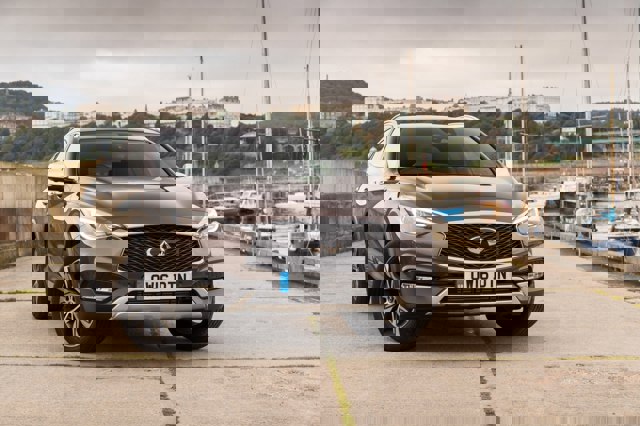
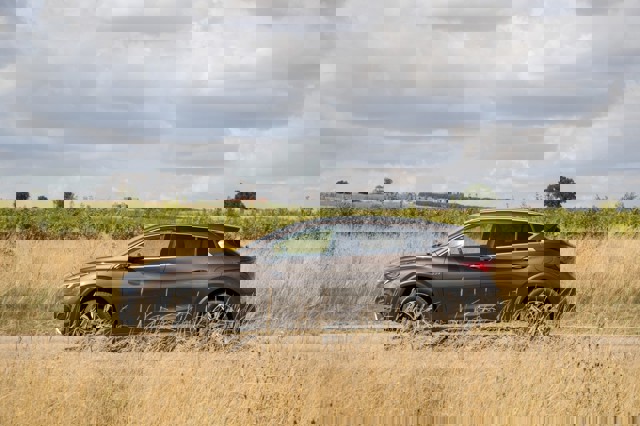
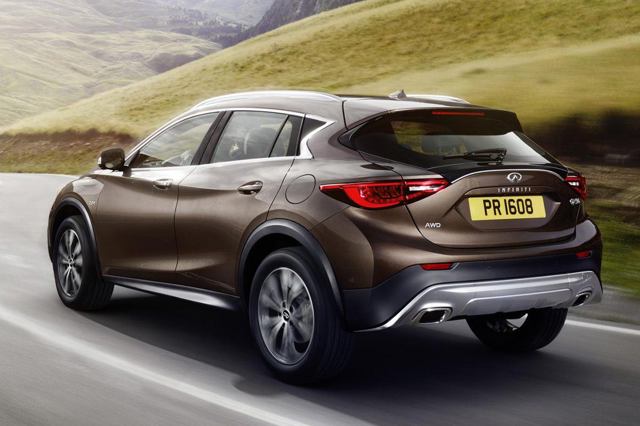

Infiniti QX30 (2016 – 2020) Verdict

 Plenty of standard equipment, good build quality, relative rarity, excellent dealer service (if there’s one close)
 Only one engine and gearbox, cramped rear seats, very obviously based on the Mercedes-Benz A-Class, high cost and depreciation
Find out more about the Infiniti QX30 (2016 – 2020)
The QX30 is Infiniti’s long-awaited premium compact crossover. If you don’t know the story already, Infiniti is a luxury brand owned by Nissan (an equivalent to Toyota’s Lexus, if you like), and very well established in both America and Japan. Unfortunately, Nissan chose to launch Infiniti into the UK market in 2008, which given the economic circumstances was mistimed. To put it mildly.
It also did so with a range of big cars powered by inefficient petrol engines. Needless to say sales have been poor, but Infiniti has survived because Nissan bankrolled it through the turbulence. Of course, that situation couldn’t continue indefinitely, and so Infiniti, finally, released a couple of trendy, reasonably priced family hatchbacks in 2016 – the Q30 and this, the taller QX30 crossover version.
You may already be putting two and two together and coming up with posh Nissan Qashqai – but you’d be wrong. Instead, the QX30 is a re-hashed Mercedes-Benz A-Class. On one hand that makes perfect sense – make a premium car from a premium base and you can’t go far wrong, right?
Not quite. The A-Class is Mercedes-Benz’s weakest model, and Infiniti has done little to either disguise the QX30’s underpinnings or improve upon them; much of the QX30’s interior architecture and switchgear is lifted unchanged from the donor car, and many of the flaws remain.
The QX30 is well built and styled to stand out, but for some reason Infiniti has concluded that it should be a sporty crossover rather than a luxurious one. The result is over-firm suspension that unsettles the ride, heavy steering that requires a little too much effort at parking speeds, and yet no real sense of driver involvement; as a general rule, the laws of physics preclude tall hatchbacks from being much fun to drive.
There is nothing uniquely advantageous to be found in the pricing, equipment or running costs departments either. Choice is extremely limited – just one drivetrain and two trim levels, priced from around £30,000.
That engine is a 2.2-litre diesel (again, taken from Mercedes-Benz) with a seven-speed automatic gearbox, and the result is a 57.6mpg average fuel economy rating with 128g/km CO2. Far from catastrophic, but most rivals offer diesels of greater efficiency, and they also offer lighter two-wheel drive versions. And petrol options, which are generally more suited to lower mileage buyers.
Equipment levels are generous, as you’d expect, with (base model) Premium versions getting cruise control, climate control, DAB radio, Bluetooth, touchscreen navigation, and automatic braking. As the cliché goes, it’s all the car you’ll need – though perhaps not for your passengers, as the QX30 suffers from limited headroom, cramped rear seats and only average boot space (430 litres).
All-in-all then, while the QX30 might prove an interesting and rare alternative for buyers willing to overlook its flaws, it’s a premium crossover that falls short in too many areas to recommend.
Reviews for Infiniti QX30 (2016 – 2020)'s top 3 rivals


.jpg?width=240&height=160&rmode=crop)
.jpg?width=240&height=160&rmode=crop)
Infiniti QX30 (2016 – 2020) handling and engines
- Engines range from 2.0t DCT AWD to 2.2d DCT AWD
- Readers report Real MPG to be between 40–51 mpg
What’s most striking about the QX30 is that it’s surprisingly lacking in the qualities that make the Nissan Qashqai so good – the car it’s built alongside at Nissan's famous Sunderland plant. The well-damped ride quality and general sense of calm in the Qashqai’s cabin isn’t present here.
It may be a little unfair to compare the QX30 to the Qashqai – they’re broadly similar sized but are made from different parts and aimed at different customers, really. The thing is though, the QX30 is less comfortable than the Qashqai, when as a ‘luxury crossover’ (and a significantly more expensive one) it really should be more so.
Instead, Infiniti has aimed at the ‘sporty’ market, whatever that is - what that means in actuality is juddery suspension and steering that feels artificially firm at town and parking speeds. And while the ergonomics are generally ok, the steering wheel does seem set a little low and the seat high.
So, while the firmer-than-average suspension means the QX30 resists lolloping body roll and there’s a sense of sharpness when turning the wheel – plus plenty of grip - this is no sporty hatchback.
It also suffers from a horribly unresponsive throttle, whose first third or so of travel seems to do very little. It’s slightly better in Sport mode (one of three selectable driver settings), but then you’re left with even firmer steering, and an automatic gearbox programmed to hold onto gear for longer than comfortable…
…which exacerbates the QX30’s other refinement issue: the engine. The 2.2-litre Mercedes-Benz sourced unit is noisy throughout the rev range, and although it has plenty of torque (350Nm at 1400rpm) it never feels especially punchy; the QX30 is a relatively heavy crossover, and feels it.
Add to that the tyre noise that you'll suffer with the inevitable set of 18/19-inch alloy wheels and you have a crossover that just isn't as calm and composed as it should be.
| Engine | MPG | 0-62 | CO2 |
|---|---|---|---|
| 2.0t DCT AWD | 42 mpg | - | 155 g/km |
| 2.2d DCT AWD | 53–58 mpg | 8.3–8.5 s | 128–143 g/km |
Real MPG average for the Infiniti QX30 (2016 – 2020)

Real MPG was created following thousands of readers telling us that their cars could not match the official figures.
Real MPG gives real world data from drivers like you to show how much fuel a vehicle really uses.
Average performance
83%
Real MPG
40–51 mpg
MPGs submitted
2
Infiniti QX30 (2016 – 2020) interior
| Dimensions | |
|---|---|
| Length | 4425 mm |
| Width | 2083 mm |
| Height | 1530 mm |
| Wheelbase | 2700 mm |
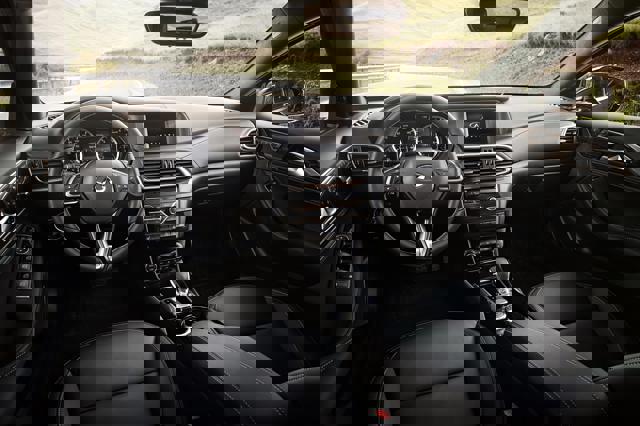
If you’re unfamiliar with the Mercedes-Benz A-Class (something Infiniti is banking on) then the QX30 cabin won’t offend you. It won’t offend you either way really, but stepping from an A-Class into this evokes true déjà vu. Much of the switchgear is lifted without change (as are the speedometer display graphics), and the basic architecture isn’t very well disguised either.
But there are some interesting flourishes, like the purple LED highlighting, and it feels very well built. It does have a handful too many buttons scattered about, but that’s generally the Japanese way and it helps make the QX30 cabin seem high-end, if not necessarily luxurious. Stitched leather and wood trim in the dashboard and door cards lift things too.
And while there isn’t much wrong with the InTouch infotainment system, the sub-menus can be slightly confusing. The good thing is, there’s both a rotary dial to control things and it’s a touchscreen – indecision on Infiniti’s part, or every base covered? You decide.
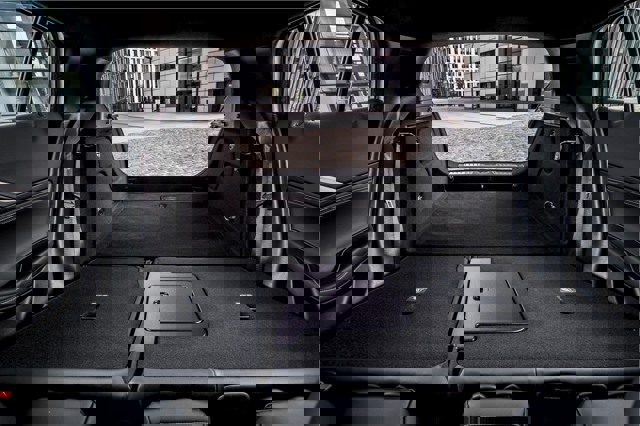
On the less subjective issue of space, the QX30 is lacking in key areas – mainly the rear. There’s precious little headroom back there and even less knee space. Added to that, rear access is hindered by an unusually small opening, and if you specify a glass roof it eats into head room even more.
The rear bench has a ski hatch and a 60/40 split as standard, but the floor doesn’t lift flush to the boot lip and capacity is on the low side of average at 430 litres – an Audi Q3 has 420 litres, but a BMW X1 has 505 and, somewhat strangely, the Mercedes-Benz GLA that it shares a platform with (it being based on the A-Class too) has 481 litres. The Nissan Qashqai, incidentally, has 430 litres too.
Elsewhere in the cabin the QX30 isn’t exactly awash with oddment space. The glovebox is small, as are the door pockets and the oddment bin in the centre console; the QX30 is a car that doesn’t conceal the day’s junk very well.
A tyre repair kit is standard too, meaning you’ll pay extra for a spare wheel.
Equipment:
Premium includes 18-inch alloy wheels, Infiniti Drive Mode selector, automatic dual-zone climate control, cruise control with speed limiter, lane departure warning, heated front seats, InTouch navigation system, active noise cancellation, LED front fog lamps and seven airbags.
Premium Tech adds LED auto levelling headlights, nappa leather seat facings, dark headlining, wood inserts in door panels and headlining, power front seats with memory adjustment, rear view camera with front and rear parking sensors.
Infiniti QX30 (2016 – 2020) models and specs
| Dimensions | |
|---|---|
| Length | 4425 mm |
| Width | 2083 mm |
| Height | 1530 mm |
| Wheelbase | 2700 mm |
| Miscellaneous | |
|---|---|
| Kerb Weight | 1542–1729 kg |
| Boot Space | - |
| Warranty | 3 years / 60000 miles |
| Servicing | 15500 miles |
| Costs | |
|---|---|
| List Price | £29,720–£36,290 |
| Insurance Groups | 21–27 |
| Road Tax Bands | D–G |
| Official MPG | 42.2–57.6 mpg |
| Euro NCAP Safety Ratings | |
|---|---|
| Adult | - |
| Child | - |
| Pedestrian | - |
| Overall | - |
| Hatchback | |||
|---|---|---|---|
| Version | List Price | MPG | 0-62 |
| Crossover 2.0t Executive DCT AWD 5dr | £31,326 | 42.2 mpg | - |
| Crossover 2.0t Premium DCT AWD 5dr | £31,041 | 42.2 mpg | - |
| Crossover 2.2d Executive DCT AWD 5dr | £30,450 | 57.6 mpg | 8.5 s |
| Crossover 2.2d Luxe DCT AWD 5dr | £29,720 | 53.3 mpg | 8.3 s |
| Crossover 2.2d Luxe Glass Pack DCT AWD 5dr | £30,440 | 53.3 mpg | 8.3 s |
| Crossover 2.2d Luxe Sensory Pack DCT AWD 5dr | £32,320 | 53.3 mpg | 8.3 s |
| Crossover 2.2d Luxe Tech DCT AWD 5dr | £35,570 | 53.3 mpg | 8.3 s |
| Crossover 2.2d Luxe Tech Glass Pack DCT AWD 5dr | £36,290 | 53.3 mpg | 8.3 s |
| Crossover 2.2d Premium DCT AWD 5dr | £30,195 | 57.6 mpg | 8.5 s |
| Crossover 2.2d Premium Tech DCT AWD 5dr | £34,225 | 57.6 mpg | 8.5 s |
| Luxe Tech Cafe Teak 2.2d DCT AWD Auto Start/Stop 5dr | - | - | - |
Model History
- November 2015: Infiniti QX30 revealed
- April 2016: QX30 prices announced
- February 2018: QX30 range updated
November 2015
Infiniti QX30 revealed
Alongside the Q30, revealed at the Frankfurt Motor Show in September 2015, the QX30 will play an integral role in Infiniti’s promise to offer customers a broader range of premium products.
Remaining true to the powerful and elegant design cues that guided the original QX30 concept, the car’s highly sculpted exterior, unique crossover stance and asymmetric cabin design exemplify Infiniti’s design-led approach to product development.
April 2016
QX30 prices announced
At its market introduction, QX30 will be available in two trim levels, equipped with a 170PS 2.2d diesel engine with an intelligent all-wheel drive system and 7-speed dual clutch transmission. QX30 Premium starts at £29,490, the top version, QX30 Premium Tech, will be available from £33,370.
February 2018
QX30 range updated
QX30 will only feature in Luxe and Luxe Tech grades but offers design updates, with optional 19-inch resurfaced, 5 double spokes light alloy wheels, attributing to a more commanding look.
Both Q30 and QX30 offer a set of connected services, such as “InTouch Tracking” to track the car in case it was stolen, and “My Car Finder” to see the whereabouts of the car on a map and provide a route back to its location. Prices start at £20,600 for the Q30 1.6-litre petrol version with the Sport repositioned to offer even better value than before from £26,060.
