
Honest John's Motoring Agony Column 17-02-2018 Part 2
Click back to Honest John’s Motoring Agonies 17-02-2018 Part 1
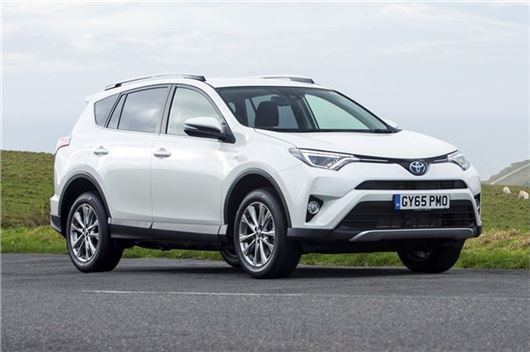
RAV limit
My wife has a Toyota 2011 RAV-4 XTR 2.2 D-4D manual that has done 45,000 miles. We would like to replace it this year with something comparable, but we feel totally confused with our choices. Whether to buy a diesel or petrol engine seems to cause a problem for a start. We need a car that has plenty of storage to transport both our daughters’ belongings to different universities during the years to come and also has the elevated driving position that the RAV currently gives us. It doesn’t have to be 4WD and we aim to do less than 8,000 miles a year in this car. Would you advise us of a car that would be a good buy, or perhaps we would be better to stick with the RAV we have and await further information from the Government regarding diesel versus petrol cars.
NR, via email
You can now get the current model RAV-4 as a 2WD 2.5 petrol hybrid or as a 4WD petrol hybrid (both CVT auto) and that makes more sense than a diesel for 8,000 miles a year. Alternatively, for lots of space and a nice driving experience, a Citroen C4 Picasso 1.2 Puretech 130 6-speed manual or 6-speed auto. You are unlikely to run out of space in one of them.
Liquid lunch
My 2009 VW Passat 1.8TSI (owned since new) has been regularly serviced and has been a reliable and comfortable car for 80,000 miles. However, it now drinks oil at the rate of 1litre per 1,000 miles.
VW won't say there is a known issue with this engine but my local independent garage has told me they know the piston rings were improved after 2009 - and they've done a few expensive engine rebuilds on this model. Do you have any advice or insight?
DD, via email
Your local garage is right. The EA888 engine was substantially improved on 2012/2013 with indirect as well as direct injection, improved oil rings and better quality timing chains. (They denied the reasons for this even then. Like talking to a fogbank.) But your car is now 9 years old so, even though the fault is a common one, it's the kind of thing to expect on a 9-year old VAG car. Options are a rebuild, some kind of oil treatment (not recommended), a slightly heavier semi synthetic rather than synthetic oil, or a part-exchange.
Mr Softy
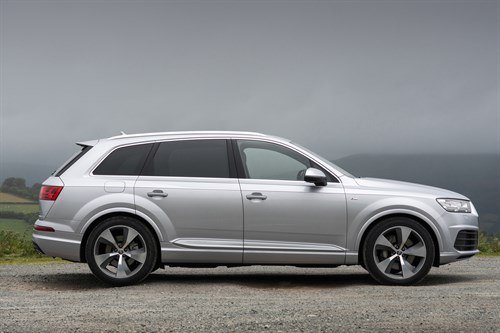
5 years ago I took your advice and bought a BMW X3 with dampener for a softer ride and it was the best car I have ever had. I now want to buy a nearly new Audi Q7 S Line 272 - for what spec should I be looking for the most comfortable ride?
DH, Cheltenham
Tested the Q7 here: /road-tests/audi/audi-q7-2015-road-test/ Here: /road-tests/audi/audi-q7-2015-uk-road-test//(This test has the most spec information.) Here: /road-tests/audi/audi-q7-e-tron-2016-road-test/ And here: /road-tests/audi/audi-sq7-2016-road-test/ The SQ7 is virtually a Bentley Bentayga and way over the top. For best ride go for the 19-inch wheels with 255/55 R19 tyres and the adaptive air suspension (which is a £2,000 option). I recently drove a Q5 on these tyres and this suspension and liked it very much: /road-tests/audi/audi-q5-20tdi-2018-road-test/
Ampstead Garden Suburb
This came from friends in Canada: “An interesting take on the new technology: I always wondered why we never saw a cost analysis on what it actually costs to operate an electric car. Now we know why. At a neighborhood BBQ I was talking to a neighbour, a BC Hydro executive. I asked him how that renewable thing was doing. He laughed, then got serious. If you really intend to adopt electric vehicles, he pointed out, you had to face certain realities. For example: A home charging system for a Tesla requires 75 amp
service. The average is equipped with 100 amp service. On our small street (approximately 25 homes), the electrical infrastructure would be unable to carry more than 3 houses with a single Tesla, each. For even half the homes to have electric vehicles, the system would be wildly over-loaded. This is the elephant in the room with electric vehicles: Our residential infrastructure cannot bear the load. So, as our genius elected officials promote this nonsense, not only are we being urged to buy the damn things and replace our reliable, cheap generating systems with expensive, new windmills and solar cells, but we will also have to renovate our entire delivery system. This latter "investment" will not be revealed until we're so far down this dead-end street that it will be presented with an oops and a shrug. If you want to argue with a green person over cars that are eco-friendly, just read the following: (Note: If you ARE a green person, read it anyway. Enlightening.): Eric test drove the Chevy Volt at the invitation of General Motors and he writes. “For four days in a row, the fully charged battery lasted only 25 miles before the Volt switched to the reserve gasoline engine. Eric calculated the car got 30 mpg including the 25 miles it ran on the battery. So, the range including the 9-gallon gas tank and the 16kwh battery is approximately 270 miles. It will take you 4 1/2 hours to drive 270 miles at 60 mph. Then add 10 hours to charge the battery and you have a total trip time of 14.5 hours. In a typical road trip your average speed (including charging time) would be 20mph. According to General Motors, the Volt battery holds 16kwh of electricity. It takes a full 10 hours to charge a drained battery. The cost for the electricity to charge the Volt is never mentioned so I looked up what I pay for electricity. I pay approximately (it varies with amount used and the seasons) $1.16 per kwh. 16 kwh x $1.16 per kwh = $18.56 to charge the battery. $18.56 per charge divided by 25 miles = $0.74 per mile to operate the Volt using the battery. Compare this to a similar size car with a gasoline engine that gets only 32 mpg. $3.19 per gallon divided by 32 mpg = $0.10 per mile. The gasoline powered car costs about $15,000 while the Volt costs $46,000. So the American Government wants loyal Americans not to do the math, but simply pay 3 times as much for a car, that costs more than 7 times as much to run, and takes 3 times longer to drive across the country.”
HC, via email
There was an announcement in January that coal fired electricity power stations will be phased out by 2025, so a further question is: where will the necessary electricity come from? It seems to take 10 - 20 years to build a new nuclear power station and UK investors aren’t very interested because of the extremely slow return on investment. (Wind power accounts for about 8% of electricity generated right now for present needs.)
Under steer
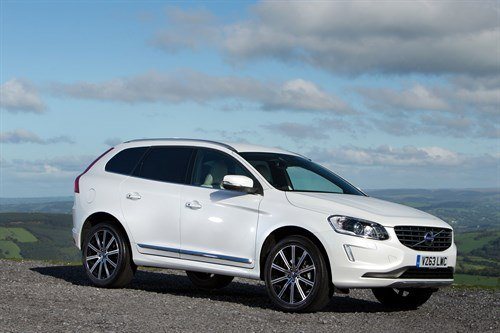
Whilst driving with my family on New Year’s Eve, our 2011/61 Volvo XC60 lost all power steering whilst manoeuvring around a steep corner. This was a daunting experience, especially given I was with my wife and two young children at the time. However, we eventually managed to find somewhere safe to pull over and call roadside breakdown who towed the car to a local garage to diagnose the problem and have the car fixed. We were informed that the alternator belt had broken and that the auxiliary drive belt tensioner had failed which would also need to be replaced. A little annoying, but these things happen so we duly asked the garage to carry out this work for us as we needed the car back for our family holiday due to start today. The part arrived, but our garage was unable to fit it as the new auxiliary drive belt tensioner is a variant on the failed part we had in our car. They contacted Volvo on our behalf and were told that the reason for the difference is that the part fitted in my car was recalled due to the likelihood of this exact issue occurring. Frustratingly, the new tensioner does not fit my model of Volvo without further alteration being required. We were advised that we would need to take the car to a Volvo dealership to have the work done and allow the new part to fit our car. In order to arrange this work, I spoke to a representative from the Volvo Endeavour (West London Volvo) who confirmed that our car was subject to this recall and also advised that these works were being carried out for free but only on those vehicles that that had been serviced by Volvo. Furthermore, they stated that due to the relative ‘minor’ nature of the defect, Volvo had no obligation to contact owners and offer them a replacement. I found this shocking based on the predicament I was left in when this part failed in my car on New Year’s Eve. Given that I am unable to use my car until this work is completed, I booked to have the work done at the earliest possible opportunity, which transpired to be 11th January. I was informed that the work could only be done at our own expense as we have used a local garage for our regular services rather than the Volvo dealer. The representative was uncertain how much this would cost, but we were later informed that this cost would be c.£450. I was astounded that I would required to pay for this replacement, given the component being replaced is subject to a product recall listed on the DVSA website. I am also shocked that Volvo are discriminating against customers who have not had their cars serviced at a Volvo dealership and are forcing these customers to bear a cost for a part that Volvo have known to be faulty since 2013. I assumed this must be incorrect so spoke with one of your customer service representatives to clarify and have again been told that I will be liable for the full cost. This is unless I can provide a service history showing that the auxiliary drive belt was replaced at the appropriate time (I believe around 55k miles). This response is completely unsatisfactory and does not relate to the issue in question which is the recalled tensioner. I wasn’t the owner of the car when the auxiliary drive belt was due to be replaced so cannot confirm if this work has been done. As a result I am not questioning any costs associated with the replacement of this belt but I do expect Volvo to cover the cost of the tensioner that they knew to be faulty. I have found the whole experience immensely disappointing and am left feeling that Volvo will go to any measures necessary avoid taking responsibility and profit from accepted shortfalls in your own product. I await your justification of this situation and suggestion of a way to resolve it.
HT, via email
I found the recall: 27-5-2010: R/2010/058: VOLVO CAR S80, V70, XC60, XC70: ENGINE MAY LOSE DRIVE AND POWER STEERING ASSISTANCE. The auxiliary drive belt tensioner may fail. This can lead to loss of steering power assistance and a slight possibility of loss of drive, should the drive belt or tensioner invade the cambelt area. FIX: Recall the vehicles that are likely to be affected to replace the auxiliary drive belt and tensioner. (NO VINs or build dates). This, of course, preceded the registration of your car. However, the recall was repeated in 2011 and in 2013: 23-12-2011: R/2011/175 (Repeat of R/2010/058: VOLVO CAR S80, V70, XC60, XC70: ENGINE MAY LOSE DRIVE AND POWER STEERING ASSISTANCE. The auxiliary drive belt tensioner may fail. This can lead to loss of steering power assistance and a slight possibility of loss of drive, should the drive belt or tensioner invade the cambelt area. FIX: Recall the vehicles that are likely to be affected to replace the auxiliary drive belt and tensioner. VINS: 000229 to 028507; 000856 to 106230 ; 000347 to 106435 ; 000329 to 065138. Build dates: 1-1-2007 to 31-12-2009. And 28-11-2013: R/2013/140 (Repeat of R/2011/175 and R/2010/058 with more VINs but no build dates): VOLVO CAR S80, V70, XC60, XC70: ENGINE MAY LOSE DRIVE AND POWER STEERING ASSISTANCE. The auxiliary drive belt tensioner may fail. This can lead to loss of steering power assistance and a slight possibility of loss of drive, should the drive belt or tensioner invade the cambelt area. FIX: Recall the vehicles that are likely to be affected to replace the auxiliary drive belt and tensioner. VINS: 000194 to 015058; 001068 to 004929; 094101 to 102873; 134101 to 141673; 135123 to 168101; 167101 to 186553. The puzzle is why your car missed any of these DVSA recalls whereby the registered keeper should have been informed by post of the need to take his car to a Volvo dealer for the recall work. If there is any evidence that the keeper at the time was informed but did not have the work done then you don't have a leg to stand on against Volvo, but if you bought the car 2nd hand you may have a case against a dealer who sold you the car 2nd hand after 28-11-2013 when the last recall went out. Whatever protestations they may make, most manufacturers and dealers will, as you say, go to any measures necessary avoid taking responsibility and losing profit from accepted shortfalls. With a few honourable exceptions (Toyota, KIA), that is the nature of the car business.
Click back to Honest John’s Motoring Agonies 17-02-2018 Part 1
 Honest John
 Radical new Jaguar concept Type 00 revealed
 Test new article
 Budget 2023: What it means for van and pick-up owners
 Budget 2023: Car tax increases revealed
 Car tax rates for 2023
 Volkswagen ID.7 2023: Prices, specs and release date
 Most public electric car charging sites considered 'unsafe'



