
Nissan defends Leaf over claims buyers were misled
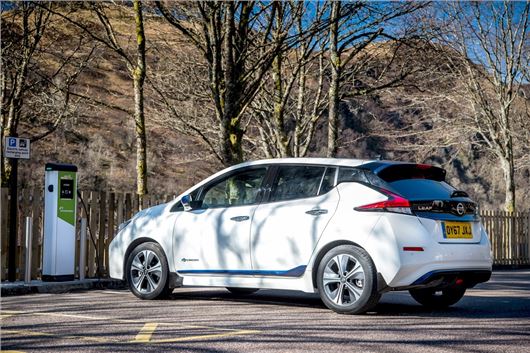
Nissan has hit back at reports that owners of the electric Leaf were misled about charging times.
According to a report by the BBC, prospective buyers were told they could use rapid chargers at motorway service stations to charge the battery to 80 per cent in just 40 minutes. This was later changed to between 40 and 60 minutes.
>>>Nissan embroiled in new emissions scandal
However, some drivers claim that Nissan didn't make it clear that, if you try to use rapid chargers twice in one day, the second charge could take several hours. Now the car manufacturer has responded saying that this is essential to preserve the battery.
'The 2018 Nissan Leaf has charging safeguards to protect the battery during repeated fast charging sessions in a short period of time,' said Nissan in a statement.
"If Nissan at the start had said what the car is capable of, without exaggerating the fact on their website, I'd have been fine with it"
'While the safeguards may increase charging times after multiple fast charging sessions, they are important to maintaining battery life over an extended time period.'
John Weatherley told the BBC that he had to wait two-and-a-half hours to charge his Leaf for a second time during a 300 mile trip to the Lake District.
"If Nissan at the start had said what the car is capable of, without exaggerating the fact on their website, I'd have been fine with it," he said.
"They said they could charge in 40 to 60 minutes, so I believed them. But it's not true. The advertising is totally misleading."
Weatherley discovered that rapid charging was only intended for use once in a journey when he wrote to Nissan to complain.
The Advertising Standards Authority (ASA) is reportedly looking into the claims that buyers have been misled, but the industry body has refused to confirm whether this is the case.
The Nissan Leaf has a claimed 235-mile range following on electric charge, but some owners are also unhappy that this range is unrealistic. It comes as the number of alternatively-fuelled vehicles continues to rocket - despite HonestJohn.co.uk data revealing that ninety-eight per cent of hybrid cars can't match their advertised MPG.
Nissan has admitted to falsifying emission and fuel economy data at its factories in Japan. The admission was made after the carmaker participated in a voluntary internal inspection of working procedures at its factories.
 Andrew Brady
 Radical new Jaguar concept Type 00 revealed
 Test new article
 Budget 2023: What it means for van and pick-up owners
 Budget 2023: Car tax increases revealed
 Car tax rates for 2023
 Volkswagen ID.7 2023: Prices, specs and release date
 Most public electric car charging sites considered 'unsafe'



