
Hyundai unveils i20 Coupe
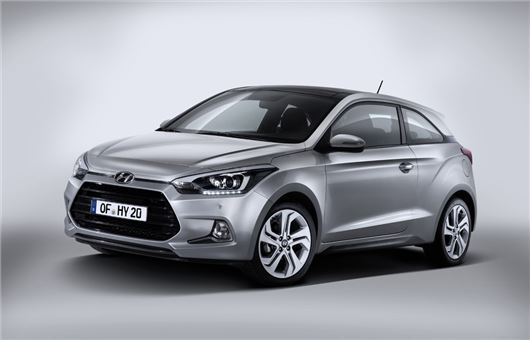
Set to one side the cynicism you may feel about the juxtaposition of 'i20' and 'coupé', because Hyundai’s brand new i20 may, possibly, justify the c-word.
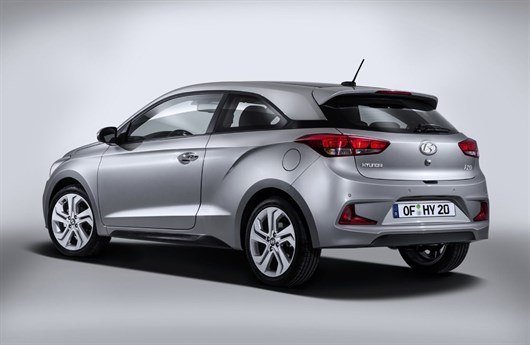
The all-new Hyundai i20 Coupe, shown for the first time in production form today, is visually differentiated from its recently revealed five-door equivalent - a methodology favoured by sister company Kia with the Cee'd and Pro_cee'd pair.
Hyundai says that the new i20 Coupe's dynamic exterior and striking interior design are intended to attract "young, lifestyle-oriented consumers."
The most striking difference is the rear three-quarter area, which features a prominent metal crease over the wheel arch, while the rear pillar has a far shorter contrasting black section than the five-door, to emphasise the lower roof line.
Hyundai says that all three of the roof pillars are markedly different, to give the car a sleeker profile, while a racy new colour, Tangerine Orange, will be exclusive to the Coupe. Despite the sportiness, Hyundai claims a best-in-class boot capacity of 336 litres – ten litres more than the outgoing i20.
The engine choice is four-fold, split 50/50 petrol to diesel. Diesel engines with 1.1 or 1.4-litre capacities generate 75PS and 90PS respectively, while a 1.25-litre petrol unit develops 84PS, and a 100PS 1.4-litre petrol provides the most power an i20 can have, for now at least. A 1.0-litre turbocharged petrol unit is on its way in 2015.
That last engine is the only one available with an automatic transmission. A six-speed manual is standard.
Both the five-door hatchback and three-door Coupe versions of the Hyundai i20 are due on sale in the UK early in 2015, and although Hyundai is yet to announce prices, expect a recommended starting point around the £11,000 mark.
 Mark Nichol
 Radical new Jaguar concept Type 00 revealed
 Test new article
 Budget 2023: What it means for van and pick-up owners
 Budget 2023: Car tax increases revealed
 Car tax rates for 2023
 Volkswagen ID.7 2023: Prices, specs and release date
 Most public electric car charging sites considered 'unsafe'



