
Insurance write off categories set to change
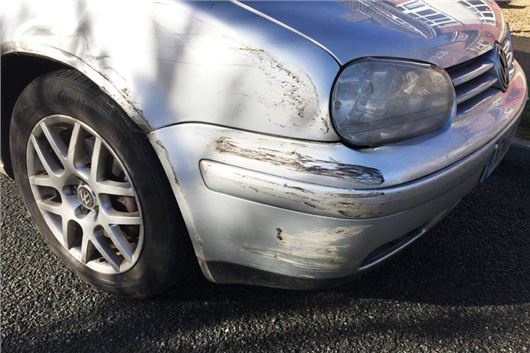
The categories for written off vehicles are set to change later this year. The new system is designed to take dangerous vehicles off the road and make buying used vehicles more transparent for consumers.
The Association of British Insurers's (ABI) insurance code of practice for dealing with motor salvage is being updated 10 years after it was last reviewed.
The new code will come into force on 1 October 2017, after two years of discussion with insurers, vehicle manufacturers, police and the salvage industry over the way vehicles are categorised for total loss.
What's changing?
The categories will be changing from the old Category A, B, C and D. These will be replaced by:
- A: Scrap
- B: Break
- S: Structurally damaged repairable
- N: Non-structurally damaged repairable
The new categories reflect the complexity of total loss vehicles more clearly, with the focus on structural damage rather than cost of repair.
Cat A (scrap) and B (break) will be staying the same, while S (structural damage) and N (non-structural damage) will replace C and D.
Guidance on salvaging motorcycles and quadricycles has been introduced and minimum qualifications are now required for all individuals who grade vehicle salvage.
How will the changes affect drivers?
Consumers should have a better indication as to why an insurer has written a vehicle off. Whether it was cosmetic, light damage or structural.
However, classic and special interest vehicles may be repaired irrespective of how badly damaged they are, providing it is safe to do so. In these cases, the Code of Practice will not apply.
Why is it changing?
Modern cars are becoming more complex to repair and the cost of electronic parts on a vehicle can easily make the car uneconomical to fix. Insurers want prospective purchasers of repaired salvage to be aware of whether the vehicle has structural damage or not.
"Crude repair techniques from 20 to 30 years ago are being used to repair modern cars unsafely. They appear to have been repaired safely, but are in fact death traps," says Tim Kelly, a council member of the The Institute of Automotive Engineer Assessors.
Will the changes help consumers?
Hopefully. People buying second-hand cars will have a better indication of what damage a car has sustained in the past. However - as with everything - it isn't a perfect fix. The code is just as it is says - a code.
It is not bound by legislation. There is nothing mandatory to enforce anyone, let alone insurers, to comply with it.
This leaves the code open to dangerous issues. Companies that self insure, like car hire companies, have no reason or duty to apply a categorisation to a damaged vehicle. In these instances, vehicles which are only fit to be crushed can end up on the road again with no history of damage.
"Putting a complete stop to the unscrupulous activity of repairing vehicles that should be scrapped will require legislation," says Tamzen Isacsson, SMMT Director of Communications.
What should I look out for when buying second-hand?
Some sellers try to pass off Category C or Category D cars as non-damaged motors by hiding their past. A vehicle history check, like HPI or Experian, is always advisable so that you don't pay more than you should for a previously written-off vehicle.
 Georgia Petrie
 Radical new Jaguar concept Type 00 revealed
 Test new article
 Budget 2023: What it means for van and pick-up owners
 Budget 2023: Car tax increases revealed
 Car tax rates for 2023
 Volkswagen ID.7 2023: Prices, specs and release date
 Most public electric car charging sites considered 'unsafe'



