
Porsche Panamera Sport Turismo Review 2026

Porsche Panamera Sport Turismo Verdict

 A very talented all-rounder. Lots of useful technology. Huge performance even from hybrid versions.
 After-thought middle rear seat. Boot space not huge. No diesel choice presently.
Find out more about the Porsche Panamera Sport Turismo
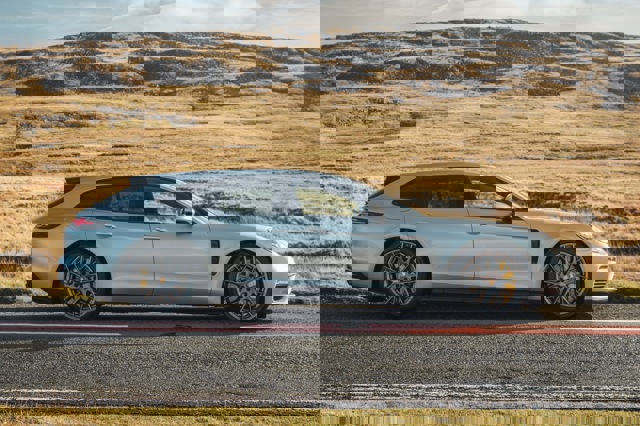
The Porsche Panamera covers an expansive brief already, aiming to be both a luxury and sports car. And it does a fairly convincing job of it. In 2017 Porsche added even more breadth to that, by adding the Sport Turismo.
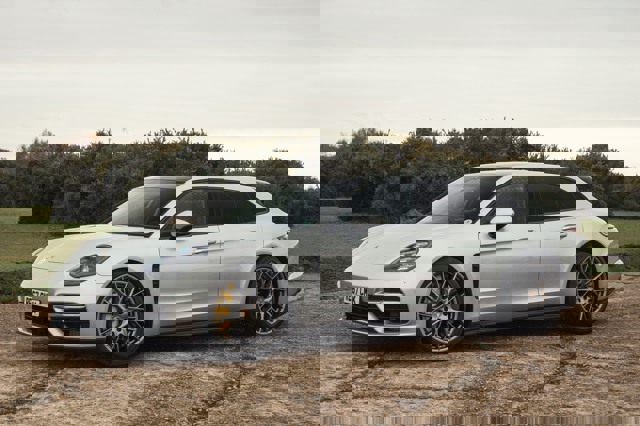
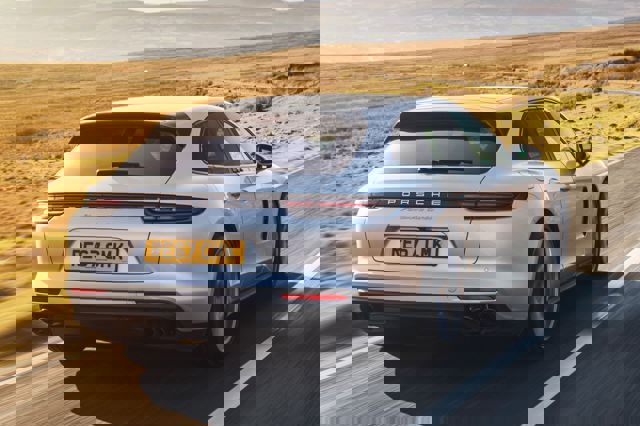
In doing so it has created a Panamera estate, or, in reality more of a shooting brake, as you’re not about to fit a Chesterfield or chest of drawers in the back. By definition though it’s an estate, that much is obvious thanks to the longer roofline and more upright rear hatchback.
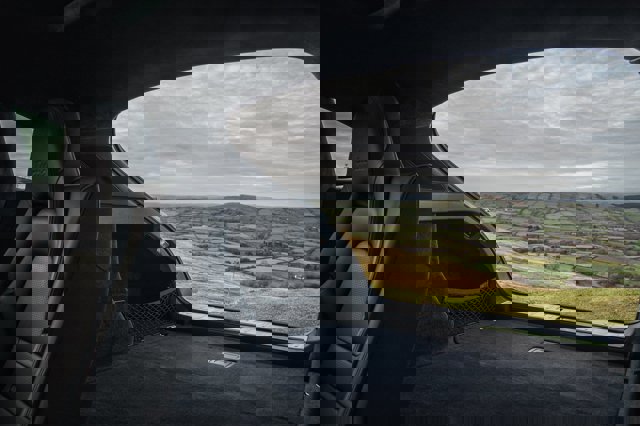
That tailgate cuts deeper into the bumper line than the conventional Panamera, too, which is all the better for your mutt to leap into. It would be best if that canine were on the smaller side, as the Sport Turismo’s boot only gains 25 litres of space over the standard Panamera with the rear seats in position, and 127 litres with them down, though practicalities aside, this is as much about looks as anything else.
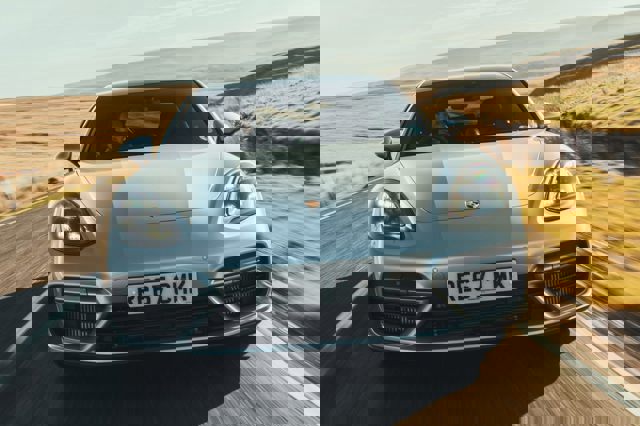
It has taken a while for the Panamera’s style to work, but in this second-generation model they’ve matured to acceptability and even appealing levels. And no more so than in Sport Turismo guise. It has few rivals, aside from the Mercedes-Benz CLS Shooting Brake, and stands out as a result.
The range, unsurprisingly, closely follows that of its conventional hatchback relation with a few omissions. Sport Turismo buyers aren’t offered the base, rear-wheel drive Panamera, instead it starts as a Panamera 4. There’s no Executive long-wheelbase version either, which is a shame, as that’d give the practicality a bit of a boost.
The entry-level Panamera 4 Sport Turismo comes with a 3.0-litre turbocharged V6 petrol engine, enough for 330PS and the same 5.5 second 0-62mph time of the regular Panamera 4. Choose the 4S and the V6 drops to 2.9-litres in capacity, but gains an additional turbo 110PS for a 440PS output.
Should those prove too tardy then the Panamera Sport Turismo Turbo adds Porsche’s turbocharged 4.0-litre V8 with 550PS and with it the ability to reach 62mph in just 3.8 seconds. Brisk, then.
In addition to the conventional petrol models - and in lieu of a diesel offering - Porsche offers a pair of hybrid choices. You can have your plug-in E-Hybrid, mated to either the 2.9-litre V6 in the Panamera 4 E-Hybrid Sport Turismo, or the Turbo’s 4.0-litre V8.
That battery and electric motor boosted Turbo S E-Hybrid Sport Turismo is like adding a bolt of lightning to the Turbo for a combined output of 680PS. Both offer the opportunity to drive on electricity alone, though you’ll need a full charge and a relatively short route, if you want a genuinely clear conscience on your commute to the city.
All are eight-speed PDK automatics and in line with the sports car brief they all do a fine job of engaging enthusiastic drivers. That it’s an accomplished GT car adds to its breadth. It might be more singular in purpose than most luxury car rivals, but neither is it overly compromised because of that.
Reviews for Porsche Panamera Sport Turismo's top 3 rivals
.jpg?width=240&height=160&rmode=crop)

.jpg?width=240&height=160&rmode=crop)

Porsche Panamera Sport Turismo handling and engines
- Engines range from Panamera 4 to Panamera Turbo E-Hybrid
Porsche’s everything-to-everyone goal with the Panamera might seem overly-ambitious, but in reality it’s difficult to argue against. From the base Panamera 4 Sport Turismo upwards, the big Porsche provides a genuinely entertaining driving experience, yet does a convincing job as a luxury GT car at the same time.
Even the slowest, and we’re talking relatively here, Panamera 4 Sport Turismo feels quick, that underlined by the 330PS Panamera 4’s 5.5 second 0-62mph time and 160mph top speed capability.
Head up the range and it gets quicker still, the twin turbocharged 2.9-litre Panamera 4S Sport Turismo having an output of 440PS, adding 20mph to the potential top speed and shaving 1.1 seconds off the 0-62mph time to record just 4.4 seconds.
With both the mid-range acceleration is impressive, too, the powerful engines, the gearbox’s plentiful ratios and quick-witted shifting, as well as that four-wheel drive traction helping mask the Sport Turismo’s not insubstantial bulk. In any regard you’ll not notice any difference over its hatchback saloon relation while driving, except the view out the back window.
The Sport Turismo impresses on outright pace then, but to that Porsche’s chassis people have similarly imbued it with mass-shrinking capability.
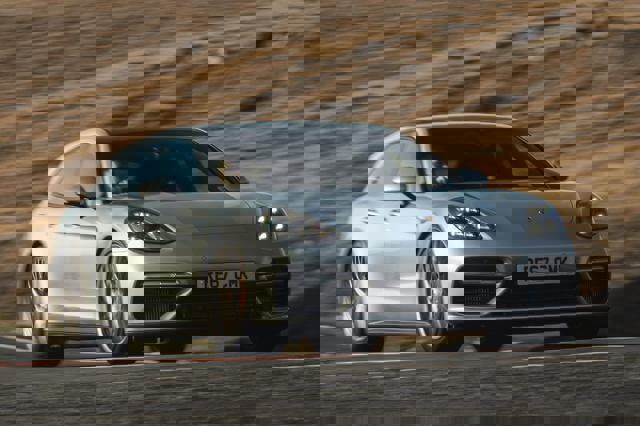
Something this large and heavy shouldn’t be so precise and agile, with quick, accurate steering and a supple, controlled ride the Panamera is as delightful on a winding road as it is steadfastly resolute on a fast, straight one.
That’s as standard, add to the chassis with options like rear-wheel steering and the Panamera Sport Turismo or adaptive air suspension with Porsche Active Suspension Management - where it doesn’t come standard - and the Panamera’s ability to thrill and engage increases further.
Add Sport Chrono if you want to drop the 0-62mph time via launch control and have access to the drive modes via a steering-wheel mounted dial. With that comes a push-to-pass button dubbed Sport Response which primes the Panamera’s systems for 20 seconds to enable immediate, stress-free overtakes.
Taking performance further still is the Turbo, which adds a 4.0-litre twin-turbo V8 to the Sport Turismo, and supercar pace. The power jumps a to 550PS, though it’s the 770Nm of torque that’s the real gain, it giving the Turbo other-worldly pace.
That Turbo used to be the mightiest Panamera you could buy, but Porsche’s path to electrification sees that position taken by the Turbo S E-Hybrid. It adds batteries and an electric motor into the equation, the combination creating an output of 680PS and 850Nm of torque.
All that is enough to allow this electrified Turbo to reach 62mph in 3.4 seconds, that ridiculous acceleration backed with the ability to travel 30 miles on electricity alone on a full charge. And dodge tax in the process.
If you want to keep your accountant happy, but don’t quite need the time-warp pace - or sizeable flagship purchase cost - the other plug-in option is the Panamera 4 E-Hybrid. It brings the same battery-only range and tax-dodging party tricks, but costs around £50,000 less. You’ll lose the eye-widening pace of the Turbo hybrid, but then the 4 E-Hybrid is quick enough, with a 4.6 second 0-62mph time.
To drive, like all Panameras the hybrids impress, though they’re more obviously compromised by the additional weight that comes with their electrically-assisted powertrain. They add a few drive modes over those of their conventionally-powered relations, including E-mode, charge and hybrid auto, that complexity meaning you’re often busy when driving them to maximise the battery capacity.
The economy gains are somewhat questionable outside specific parameters, drive it with a depleted battery and consumption will be below that of its regular petrol relations, though manage it properly and there’s some joy to be had seeing huge economy figures on the trip computer - however misrepresentative they might truly be.
As well integrated as it all proves, the hybrids don’t ride with quite the suppleness of their conventionally powered relations, while the odd knock from the automatic transmission betrays the juggling of power sources. Grip runs out a little bit quicker too, as the sheer weight of the hybrids comes into play.
In reality though, you’ll need to be going very fast indeed in any Panamera Sport Turismo to get anywhere near breaching the huge levels of traction and grip they possess.
| Engine | MPG | 0-62 | CO2 |
|---|---|---|---|
| Panamera | - | - | 300–302 g/km |
| Panamera 4 | 36 mpg | 5.5 s | 180–260 g/km |
| Panamera 4 E-Hybrid | - | 4.4–4.6 s | 56–60 g/km |
| Panamera 4S | 34 mpg | 4.4 s | 189–260 g/km |
| Panamera 4S Diesel | 42 mpg | 4.5 s | 178 g/km |
| Panamera 4S E-Hybrid | - | 3.7 s | 67 g/km |
| Panamera E-Hybrid | - | - | 64 g/km |
| Panamera Sport Turismo GTS | 27 mpg | 4.1 s | 242 g/km |
| Panamera Turbo | 27 mpg | 3.8 s | 217 g/km |
| Panamera Turbo E-Hybrid | 94 mpg | 3.4 s | 69 g/km |
| Panamera Turbo S E-Hybrid | - | 3.2 s | 69 g/km |
Porsche Panamera Sport Turismo interior
- Boot space is 418–1287 litres
| Dimensions | |
|---|---|
| Length | 5049–5053 mm |
| Width | 2165 mm |
| Height | 1422–1432 mm |
| Wheelbase | 2950 mm |
Inside, the Sport Turismo is all familiar Panamera, the cabin beautifully finished, the controls a mix of haptic touch buttons on the centre console and a wide configurable touchscreen above it.
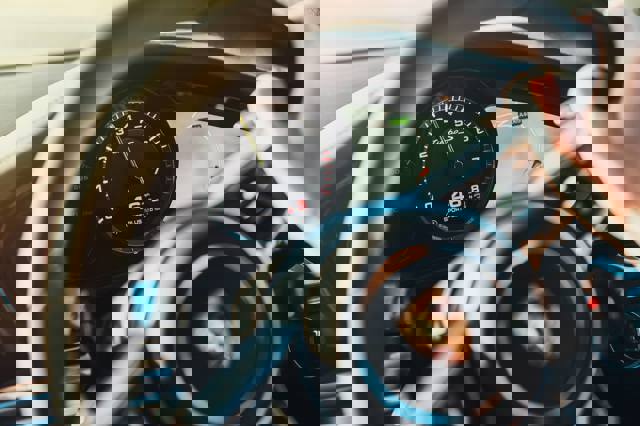
The instruments mix a conventional rev counter and digital screens. These, like the centre one, able to offer anything from driver data to sat nav, information and entertainment details.
It might be an estate but the overall figures for boot capacity are 520 litres with the seats up and 1390 litres with them folded. That is around the capacity offered by Audi’s A7 Sportback - which does without the Panamera Sport Turismo’s more overtly practical rear end styling.
Choose the plug-in hybrid versions and those gains drop back by about 90-litres. The marginal gains in loadspace usefulness are arguably irrelevant, not least because buyers in the Panamera Sport Turismo sphere usually have access to other vehicles. A Cayenne is more capacious, instead the Panamera Sport Turismo making a sizeable case for itself stylistically, inside and out.
The material quality is exceptional, the Panamera introducing a new interior look for Porsche. And one that works as well as it looks. The seats are extremely supportive, up front, as they are on the two outer seats in the back.
The Sport Turismo is the first Panamera to offer the ability to carry three passengers in the rear, but it would be a cruel person who expected anyone to use the middle one for all but the briefest of trips.
That middle seat is very much in the afterthought league, it more of a concessionary seatbelt spanning the high perch that separates the two proper rear seats. With foot space encroached massively by the sizeable transmission tunnel, even Porsche concedes it’s a 4+1 seater, rather than a proper five-seat vehicle.
Comfort for four, then, is good, plus there's the option to have heated, ventilated and massaging seats if you’re after more comfort. The optional equipment list is extensive, with things like rear-seat entertainment a possibility, though it covers modern essentials like climate control, sat nav, DAB and Bluetooth mobile phone connection. Even so, think of it and it’s probably available optionally, but start ticking those options and an already expensive car becomes significantly more so.
Porsche Panamera Sport Turismo models and specs
| Dimensions | |
|---|---|
| Length | 5049–5053 mm |
| Width | 2165 mm |
| Height | 1422–1432 mm |
| Wheelbase | 2950 mm |
| Miscellaneous | |
|---|---|
| Kerb Weight | 1880–2365 kg |
| Boot Space | 418–1287 L |
| Warranty | 3 years / Unlimited miles |
| Servicing | 20000 miles |
| Costs | |
|---|---|
| List Price | £98,362 |
| Insurance Groups | 50 |
| Road Tax Bands | A–M |
| Official MPG | 26.6–94.2 mpg |
| Euro NCAP Safety Ratings | |
|---|---|
| Adult | - |
| Child | - |
| Pedestrian | - |
| Overall | - |
Currently on sale
| Estate | |||
|---|---|---|---|
| Version | List Price | MPG | 0-62 |
| 4 V6 330 AWD Twin Turbo PDK Auto Start/Stop 5dr | - | - | - |
| 4 V6 462 PDK Auto 17.9kWh Elec Pwr 136hp Start/Stop 5dr | - | - | 4.4 s |
| 4S V6 440 AWD Twin Turbo PDK Auto Start/Stop 5dr | - | - | - |
| 4S V6 560 PDK Auto 17.9kWh Elec Pwr 136hp Start/Stop 5dr | - | - | 3.7 s |
| GTS V8 480 AWD Twin Turbo PDK Auto Start/Stop 5dr | - | - | - |
| Turbo S V8 630 AWD Twin Turbo PDK Auto Start/Stop 5dr | - | - | - |
| Turbo S V8 700 PDK Auto 17.9kWh Elec Pwr 136hp Start/Stop 5dr | - | - | 3.2 s |
On sale until December 2020
| Estate | |||
|---|---|---|---|
| Version | List Price | MPG | 0-62 |
| Estate 2.9 V6 10 Yours Edition E-Hy Pdk 5dr | - | - | - |
| Estate 2.9 V6 4 330 10 Yours Edition Pdk 5dr | - | - | - |
| Estate 2.9 V6 4 330 Pdk 5dr | - | - | - |
| Estate 2.9 V6 4 462 E-Hybrid Pdk 5dr | - | - | 4.6 s |
| Estate 2.9 V6 4S 440 Pdk 5dr | - | 34.0 mpg | 4.4 s |
| Estate 4.0 V8 4S Diesel 421 Pdk 5dr | £98,362 | 41.5 mpg | 4.5 s |
| Estate 4.0 V8 Gts 460 Pdk 5dr | - | 26.6 mpg | 4.1 s |
| Estate 4.0 V8 Turbo 550 Pdk 5dr | - | 26.6 mpg | 3.8 s |
| Estate 4.0 V8 Turbo S E-Hybrid Pdk 5dr | - | 94.2 mpg | 3.4 s |
On sale until July 2019
| Estate | |||
|---|---|---|---|
| Version | List Price | MPG | 0-62 |
| Estate 2.9 V6 4 330 Pdk 5dr | - | 35.8 mpg | 5.5 s |
Model History
- March 2017: Porsche reveals Panamera Sport Turismo
- September 2017: Panamera Turbo S E-Hybrid launched
March 2017
Porsche reveals Panamera Sport Turismo
The Panamera Sport Turismo comes in five different versions - Panamera 4, Panamera 4S, Panamera 4S Diesel, Panamera 4 E-Hybrid and Panamera Turbo.
With a large tailgate, low loading edge, increased luggage compartment volume and a 4+1 seating concept, the new Panamera model offers the perfect combination of everyday usability and maximum flexibility.
These include the digital Porsche Advanced Cockpit, pioneering assistance systems such as Porsche InnoDrive, including adaptive cruise control, chassis systems such as rear axle steering, the Porsche Dynamic Chassis Control (PDCC Sport) electronic roll stabilisation system and powerful powertrains.
In addition, all Panamera Sport Turismo vehicles are equipped with Porsche Traction Management (PTM) – an active all-wheel drive system with electronically controlled multi-plate clutch – as standard. As of the S models, adaptive air suspension with three-chamber technology is also supplied as standard.
The vehicle is 5,049 millimetres long, 1,428 millimetres high and 1,937 millimetres wide, while the large wheelbase spans 2,950 millimetres. The silhouette is further characterised by short body overhangs and large wheels measuring up to 21-inches.
At the top of the vehicle, the roof extends into an adaptive spoiler. The angle of the roof spoiler is set in three stages depending on the driving situation and selected vehicle settings, and generates an additional downforce of up to 50 kg on the rear axle.
Up to a speed of 170 km/h, the aerodynamic guide element – a central system component of the Porsche Active Aerodynamics (PAA) – stays in its retracted position with an angle of minus seven degrees, which reduces drag and thus optimises fuel consumption.
The new Sport Turismo is the first Panamera to feature three rear seats. The two outside seats take the form of individual seats – in keeping with the model line’s claim for sporty performance with maximum passenger comfort – thereby producing a 2+1 configuration at the rear. As an option, the Panamera Sport Turismo is also available in a four-seat configuration with two electrically adjustable individual seats at the rear.
September 2017
Panamera Turbo S E-Hybrid launched
T he Panamera Turbo S E-Hybrid Sport Turismo combines a 550PS 4.0-litre twin-turbocharged V8 engine with a 136PS electric motor charged by a lithium-ion battery, resulting in a system power of 680PS.
The instantaneous response characteristics of the electric motor contribute to the Panamera developing 850 Nm of torque. And this translates most obviously in the sprint from zero to 62 mph in 3.4 seconds. Underlining the breadth of ability delivered by the hybrid powertrain is an average fuel consumption of over 97 mpg Combined in the New European Driving Cycle (NEDC), and a typical range of up to 31 miles using solely electric power.
The Porsche Panamera Turbo S E-Hybrid Sport Turismo is available to order priced from £140,868 inc VAT RRP (including Panoramic roof system). Porsche Dynamic Chassis Control (PDCC Sport) roll stabilisation, Porsche Torque Vectoring Plus (PTV Plus) rear limited slip differential, the high-performance Porsche Ceramic Composite Brake (PCCB) system, 21-inch alloy wheels in distinctive 911 Turbo design, and the Sport Chrono Package are all fitted as standard. As with all Panamera Sport Turismo models that deliver more than 440PS, the new top model also features adaptive three-chamber air suspension including Porsche Active Suspension Management (PASM).
